Homesteading: Crop Selection, Pest Control, and Real Food
Kitchen Gardens That Work:
There was a time when the kitchen garden was not optional. It was not decorative, and it certainly was not a weekend hobby. It was how families fed themselves. Whether called truck gardening, market gardening, or simply “the garden out back,” it represented a direct relationship between people and their food.
The term “truck gardening” comes from the old English word for barter or trade. These were small-scale, intensive operations designed to produce vegetables for local markets. Close to towns, close to customers, and deeply tied to the rhythms of season and soil. Nothing fancy. Just productive land and people who knew how to use it. When you go to your local farmer’s market, those vendors most likely have some form of a truck garden. Seek those farmers out; they represent a genre of people working to do good, who can feed you and your family real food.
The kitchen garden is the household version of that system. Smaller, more personal, but built on the same principles. Diversity, seasonality, and attention. In many ways, it is the most practical entry point into homesteading. You do not need hundreds of acres. You need a manageable piece of ground, access to water, and a willingness to learn.
The problem today is not that we cannot do this. It is that most people no longer know where to start. The good news is that the fundamentals are straightforward and, once learned, tend to stick.
Below is common-sense advice for a successful vegetable garden, available only to paid subscribers:
Crop Selection by Climate Zone
The land you live on will tell you what it wants to grow. Most people just are not listening.
The USDA hardiness zones provide a useful framework, but they are only a starting point. Frost dates, humidity, rainfall, and soil type all matter just as much. Still, understanding your general climate zone will prevent a lot of unstarted seeds, dead plants, and frustration.
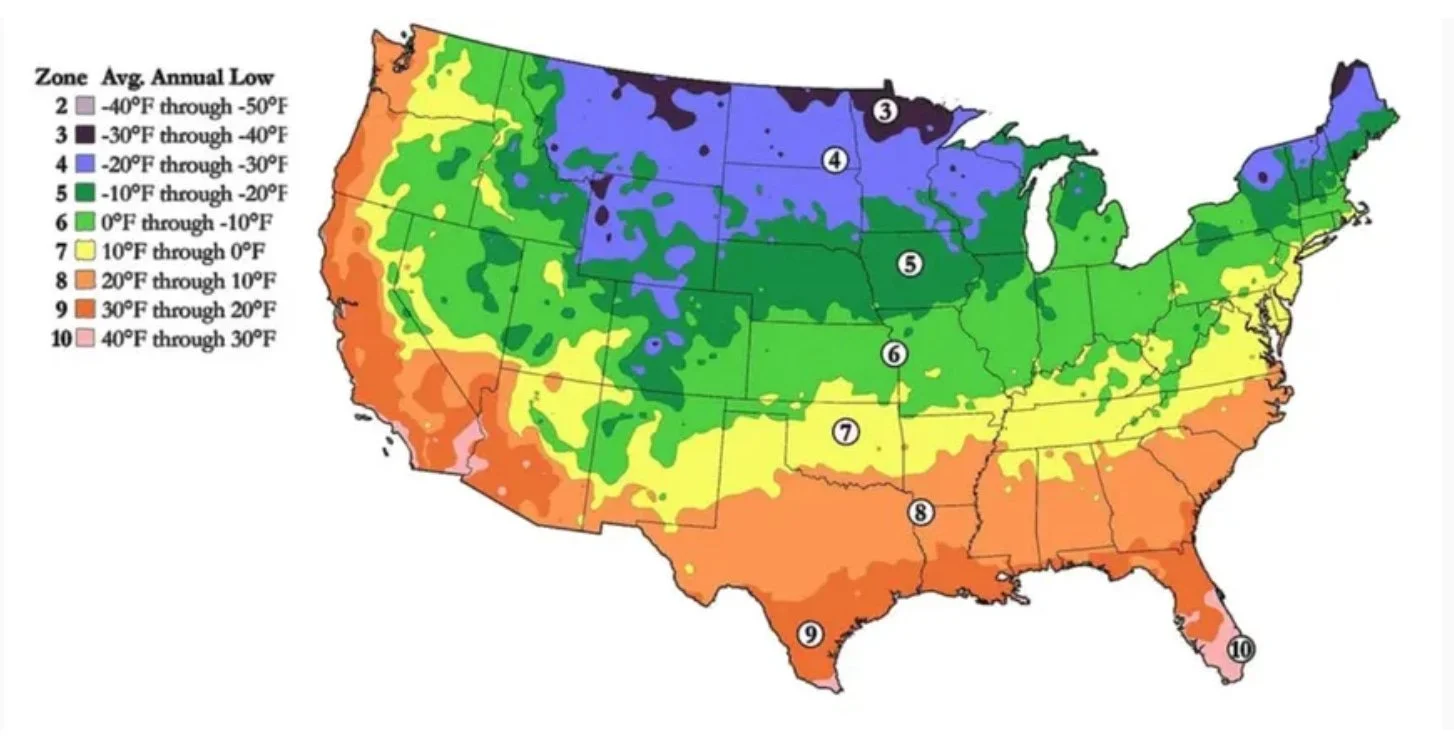
In colder regions, Zones 3 through 5, the growing season is short and sometimes unforgiving. You focus on crops that can mature quickly or tolerate cold. Root vegetables such as carrots, beets, and turnips perform well. Brassicas like cabbage, broccoli, and kale are reliable. Peas and potatoes are staples. You are not fighting the cold so much as working around it.
In moderate climates, Zones 6 and 7 offer more flexibility. You can run two distinct seasons. Cool crops in spring and fall, warm crops in summer. Tomatoes, beans, squash, cucumbers, and peppers thrive here, while greens and root vegetables can be cycled through on either end. Most likely, some of the cooler summer crops, such as green peas, will be difficult to grow. This is where a kitchen garden can become highly productive if managed well.
In warmer climates, Zones 8 through 10, heat becomes the limiting factor rather than cold. Many classic garden crops simply do not tolerate high temperatures. Lettuce bolts. Spinach disappears. Timing shifts. You plant cool crops in late fall and winter, and transition to heat-tolerant crops such as okra, sweet potatoes, cowpeas, and certain peppers in the summer. The calendar is flipped compared to northern climates.
Local conditions always matter more than general rules. If your soil is heavy clay, drainage becomes an issue. If you are in a humid environment, fungal diseases will be a constant companion. If you are in an arid region, water management becomes the central challenge.
The simplest advice is also the most important. Grow what does well where you are. Not what you wish would grow.
The state extension office is your friend and often offers classes in both vegetable gardening and orchard care.
Basic Pest Management
If you grow food, something else will try to eat it. That is not a sign of failure. It is a sign that your garden is part of a functioning ecosystem.
The goal is not to eliminate pests. That approach almost always leads to overuse of chemicals and long-term problems. The goal is to manage pressure and maintain balance.
Everything starts with soil. Healthy soil produces healthier plants. Plants grown in biologically active soil tend to be more resilient and less attractive to pests. Weak plants invite trouble.
Diversity helps more than most people realize. A garden filled with a single crop is an open invitation to insects and disease. Mixed plantings disrupt that pattern. Companion planting is not a cure-all, but it works often enough to matter. Herbs, flowers, and a variety of crops attract beneficial insects that prey on pests.
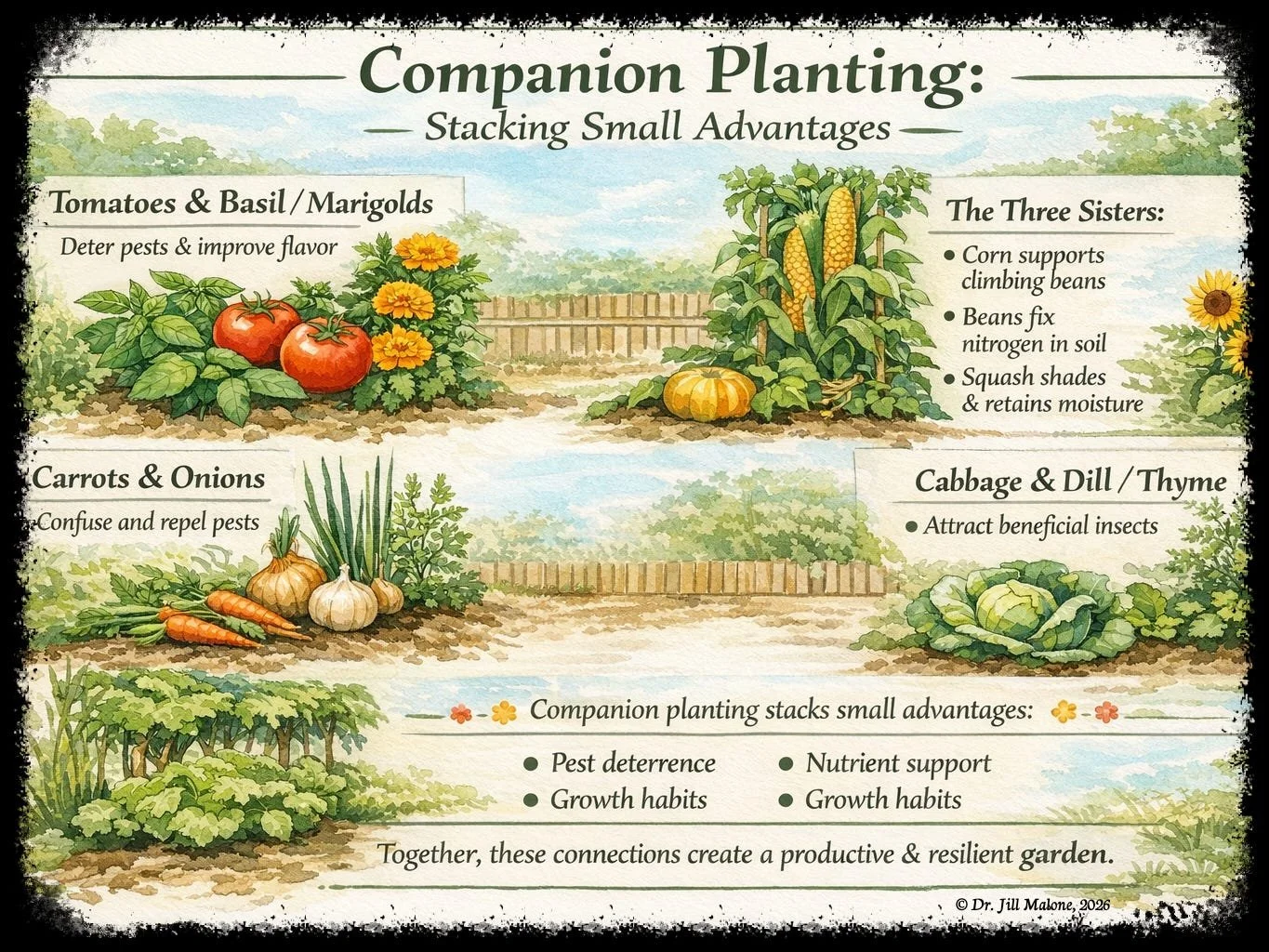
Companion planting is less about rigid rules and more about stacking small advantages in your favor. Certain plants naturally support one another through pest deterrence, nutrient use, or growth habits. Classic pairings have stood the test of time for a reason. Tomatoes do well alongside basil, which may help deter insects while improving flavor, and marigolds, which are often used to reduce nematode pressure in the soil. Carrots and onions are a natural match, as the scent of each can confuse the pests that typically target the other. The traditional “three sisters” planting of corn, beans, and squash is a model of efficiency, with corn providing structure for beans to climb, beans fixing nitrogen in the soil, and squash shading the ground to suppress weeds and retain moisture. Cabbage family crops benefit from nearby herbs like dill and thyme, which attract beneficial insects that prey on caterpillars. Even simple combinations, such as lettuce growing in the partial shade of taller plants, can improve yields by reducing heat stress. None of this is magic, but when layered together, these small relationships create a more resilient and productive garden system.
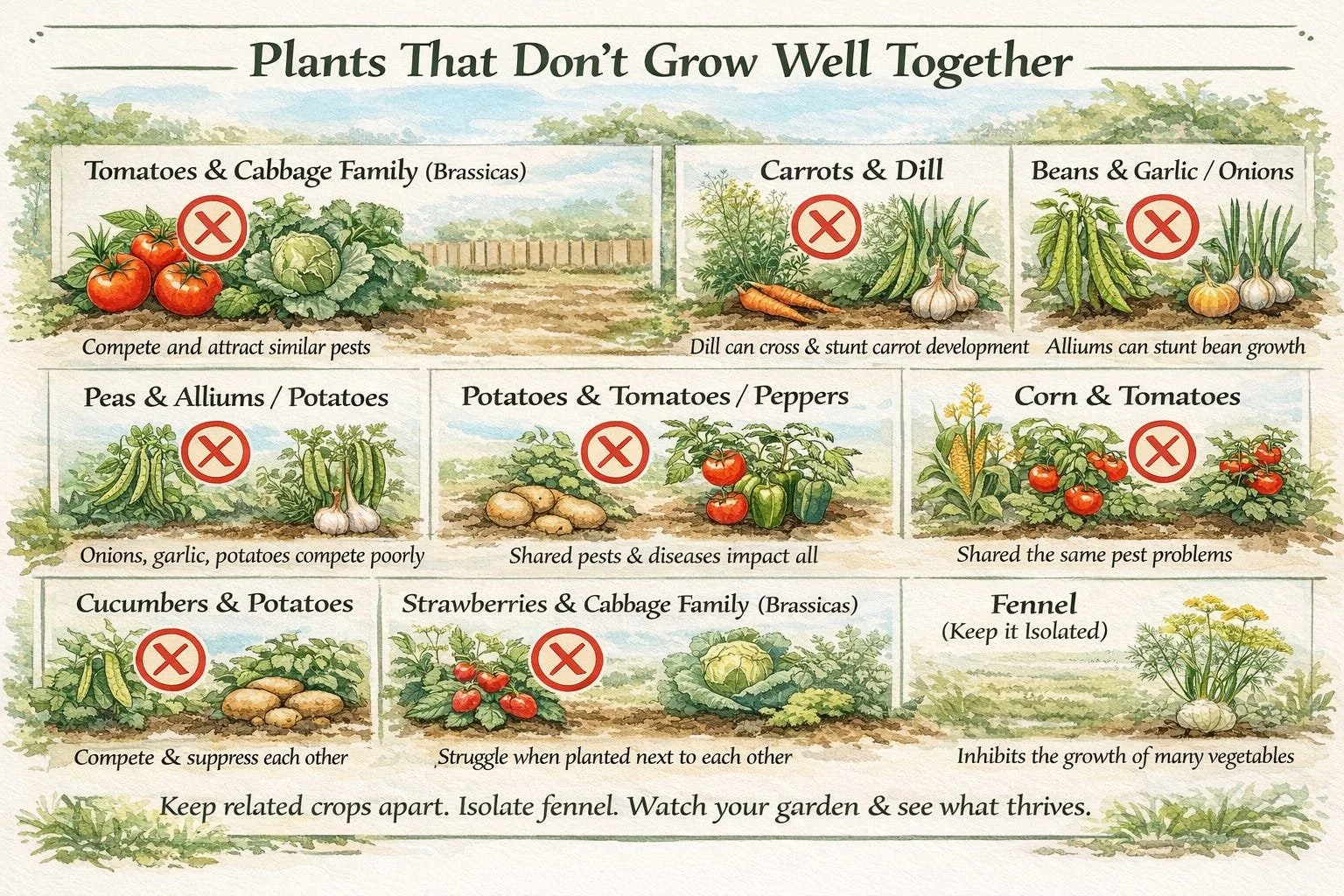
Some plants help each other. Others quietly work against each other. The mistakes are not always obvious at first, but over time you’ll see it—stunted growth, poor yields, or pests that seem to show up all at once. The simplest approach is to avoid crowding similar crops together, keep fennel on its own, and pay attention to what thrives and what struggles. The garden will tell you what works if you take the time to notice.
Physical barriers are simple and effective. Row covers, netting, and fencing solve problems before they begin. If you can keep pests out, you do not have to deal with them later. This is one of those lessons that applies across the homestead. Prevention is easier than correction.
Daily observation matters. Walk the garden. Look under leaves. Catch problems early. Hand-picking insects is not glamorous, but it works, especially in smaller gardens. It also forces you to stay engaged and really look at the plants to assess their health and catch disease early.
Animals can help. Chickens will happily clean up insects and larvae, particularly in the off-season. Guinea fowl are excellent for tick control. Ducks can be useful in wetter environments. None of these are precise tools, but they contribute to overall balance.
When intervention is necessary, start with the least aggressive option. Insecticidal soaps, neem oil, and diatomaceous earth all have their place. Used sparingly and correctly, they can reduce pest loads without destroying beneficial insect populations.
Milky spore (spores of the bacteria Paenibacillus popilliae) is one of those slow, almost invisible solutions that rewards patience. It’s a soil bacterium that specifically targets Japanese beetle grubs, infecting them and then persisting in the soil for years, gradually building a kind of self-sustaining control. The downside is that it’s narrow in scope and not immediate. We have used milky spore very successfully in our fruit orchard, but it took years to see the real value. Milky spore can be purchased in farm stores or online.
Beneficial nematodes are the opposite. They are fast, broad-spectrum biological hunters that go after a range of soil pests like grubs, cutworms, and root maggots, working within days when soil moisture and temperature are right. In practice, we see these as complementary tools: milky spore for long-term pressure on Japanese beetles, and nematodes as a more active, responsive way to manage whatever is chewing on your roots right now. Beneficial nematodes can be purchased from online shops.
Wood ash, saved from winter fires, can be spread lightly around the base of plants. This can help deter slugs and snails. We use a small metal trash can to collect ash from the wood stove. This prevents any hot embers from starting a fire and keeps the ash dry.
Seed Saving
Saving seeds changes your relationship with the garden. You are no longer just growing food. You are participating in the continuity of the system.
The first rule is simple. Not all seeds are worth saving. Hybrid seeds, often labeled F1, do not reproduce reliably. If you plant them again, you will not get the same result. For seed saving, you want open-pollinated or heirloom varieties.
Some crops are straightforward. Beans, peas, tomatoes, basil, and peppers are excellent starting points. Allow a portion of the crop to fully mature. Beans dry on the plant. Tomatoes develop fully ripened seeds. These are easy wins.
Other crops require more planning or may not be worth bothering to start. Squash, corn, and members of the Brassica family cross-pollinate readily. Brassicas include bok choy, broccoli, Brussels sprouts, cabbage, cauliflower, collard, kale, kohlrabi, radishes, rutabaga, and turnip. If you are growing multiple varieties, you will need to separate them by distance or stagger planting times to prevent unwanted crosses when saving seed. Frankly, saving seeds from these crops is almost a fool’s errand, unless you have a lot of land to separate your various plant varieties.
Over time, saved seeds begin to adapt. They reflect your soil, your climate, and your growing practices. This is how agriculture functioned for thousands of years. Locally adapted seed stock is more resilient and often more productive in the long run.
Storage is simple but important. Seeds must be kept cool, dry, and out of light. Glass jars work well. Jill uses envelopes to save dried seeds, as keeping glass jars takes up a lot of shelf space. Label everything clearly, including the year saved. Time has a way of erasing memory.
There is also a deeper benefit. Saving seeds reinforces independence. It reduces reliance on commercial seed systems and preserves genetic diversity that might otherwise be lost.
Of course, taking slips from sweet potatoes and potatoes – stored from last year’s harvest is also an excellent form of preserving your garden from year to year.
Season Extension
One of the easiest ways to increase production is to extend your growing season. You do not need more land. You need more time.
Cold frames are a simple starting point. Essentially a box with a transparent lid, it traps heat and protects plants from wind and frost. They can be built from scrap materials and are surprisingly effective.
Row covers are another low-cost option. Fabric or plastic laid over crops creates a microclimate that can add weeks to the growing season on both ends. They also provide protection from certain pests.
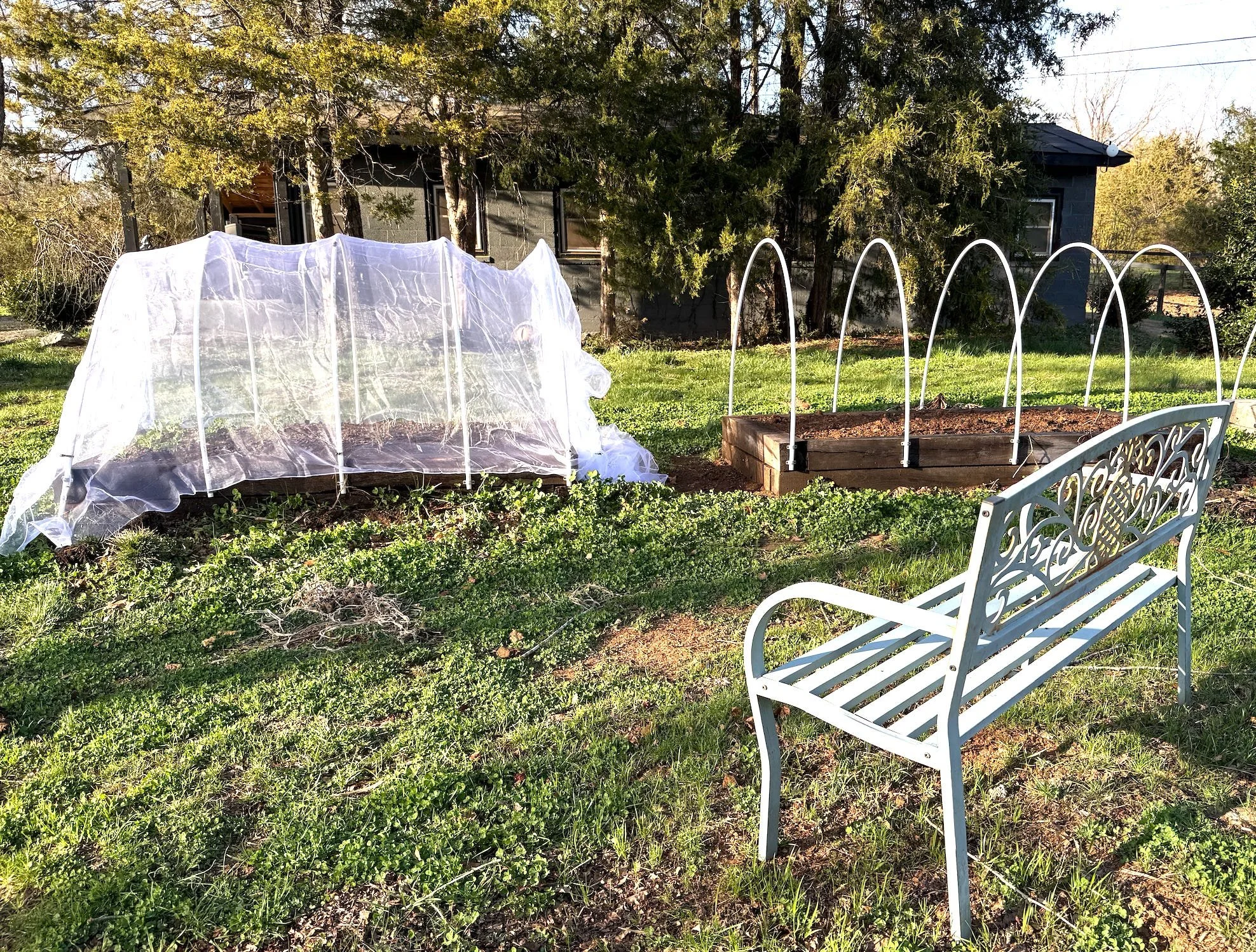
Hoop houses, or low tunnels, take this a step further. Flexible hoops covered with plastic create a protected environment for plants. They are inexpensive compared to full greenhouses and can dramatically extend production. We use these extensively on our raised beds.
Timing becomes the key variable. In colder climates, you start earlier in the spring and push later into the fall. In warmer climates, you shift production into the cooler months and protect crops from excessive heat.
Winter gardening is possible in more regions than people think. Hardy greens, such as kale and spinach, can survive under protection. Growth slows, but it does not stop entirely.
Season extension is not just about maximizing output. It creates consistency. It smooths the gaps between harvests and reduces dependence on outside food sources.
Bringing It All Together
Truck gardening and kitchen gardens were never about romantic ideals. They were about practicality. They were about feeding people with what the land could produce, close to home, with knowledge passed from one generation to the next.
We have largely abandoned that model in favor of convenience and scale. The result is a food system that is efficient but disconnected from the realities of soil, season, and human health.
Rebuilding a kitchen garden is not a rejection of modern life. It is a correction. It is a way to reintroduce resilience into a system that has become overly centralized. Now, such gardens are also about creating food that is free of chemicals and pesticides. That are brimming with micronutrients.
You do not need to do everything at once. Start small. A few beds. A handful of crops that you actually eat. Learn what works. Pay attention. Adjust. Learn to watch for the insects and pests that will plague your garden and know that there are solutions that are less toxic to the earth and humans. We are all connected.
Over time, the garden teaches you. It teaches patience, observation, and humility. It also teaches you something that has been largely forgotten.
Food is not a product. It is a process.
And once you understand that, you begin to see everything else differently.
JGM
Note: This is part of a chapter to be published in our new book, “Homesteading for Health” - coming soon!