Homesteading: Mid-Summer Rains
and life on the farm
We went to a party at my extraordinarily talented physician, Dr. Brooke Miller’s, house this weekend. There were lots of local people and farmers in attendance. What was on everyone’s mind was the weather. Yep, the weather. It seems like it is the summer for “gully washers.” The summer rains seem to come down in torrents every other day or so. This weather pattern has persisted for months. In fact, the party ended for us when the clouds darkened, and again, another storm was brewing. As we drove home, buckets of rain and strong winds buffeted our little car around. We returned to the farm to find that, again, our gravel road had washed out, and the construction on the new barn had been flooded yet again.
Despite all the rain, it is hot as Hades outside!
The good news is that our fruit trees are the happiest they have ever been, and the vegetable garden is lush and verdant. Jill has not had to water nearly as much as usual.
While we were in Corfu and the eastern coast of Italy for the past two weeks, our farm manager managed to stay on top of the gardens, so we came home to lots of healthy plants.
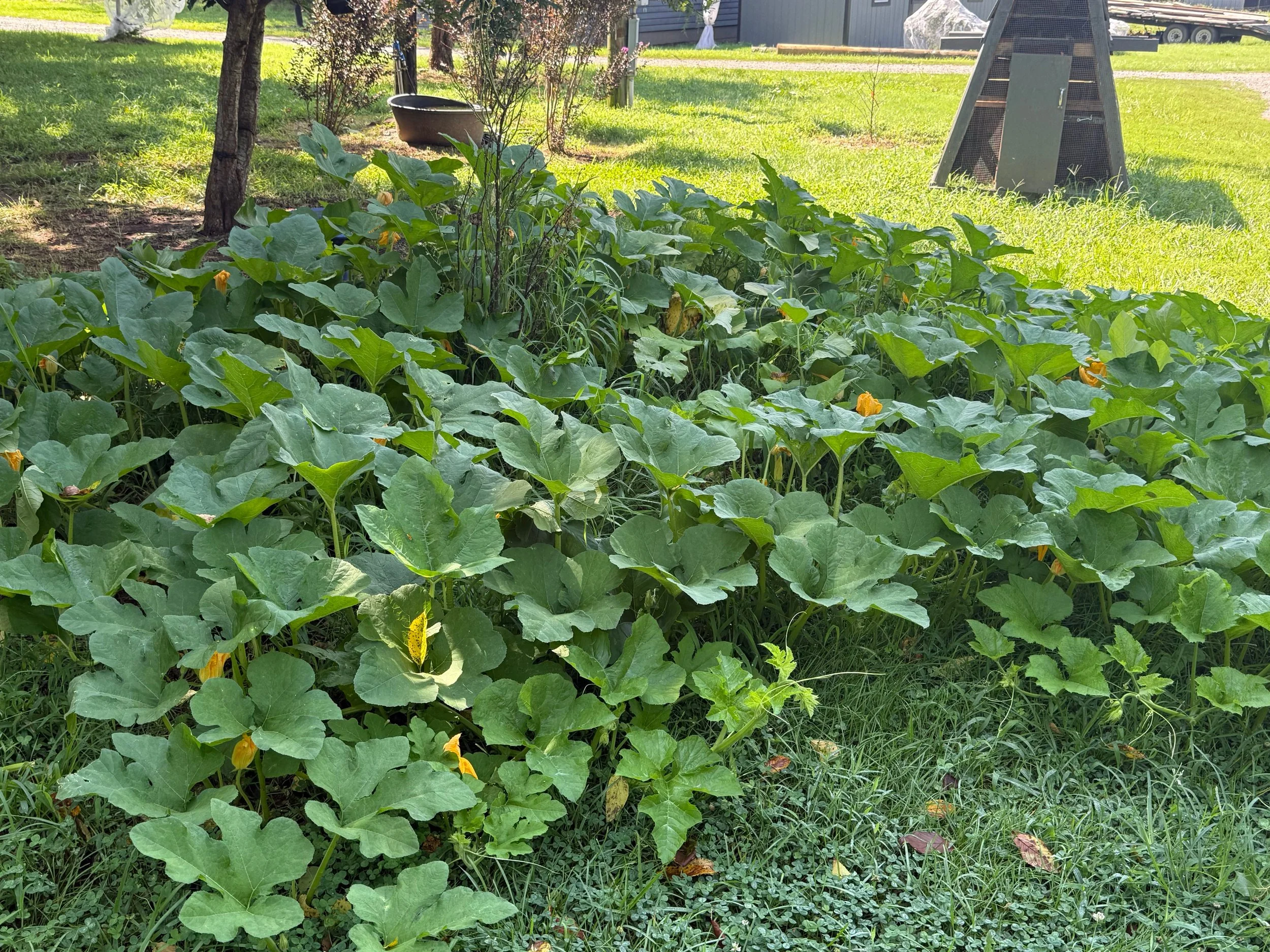
The pumpkin plants are growing like gangbusters. No little green pumpkins yet - but lots of huge, beautiful, bright yellow blooms.
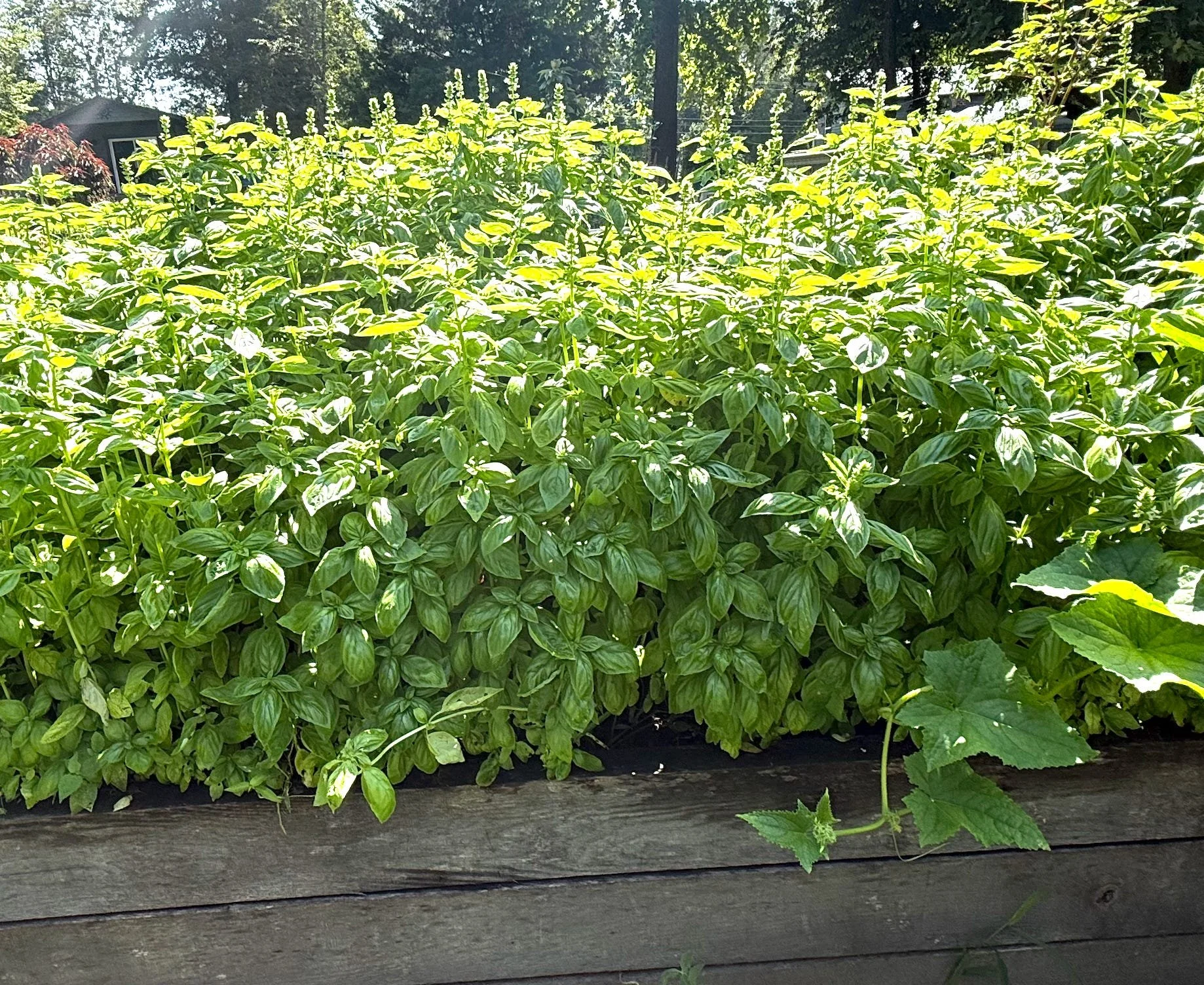
Before we left on our big trip, Jill processed tens of pounds of basil leaves for pesto. We now have many, many mason jars of ground basil and oil in the freezer, all ready to be made into pesto. Yet still - the plants keep growing!
I think I know where at least some of these plants are heading. Basil is not a chicken favorite - but basil greens are better than no greens; if you are a chicken!
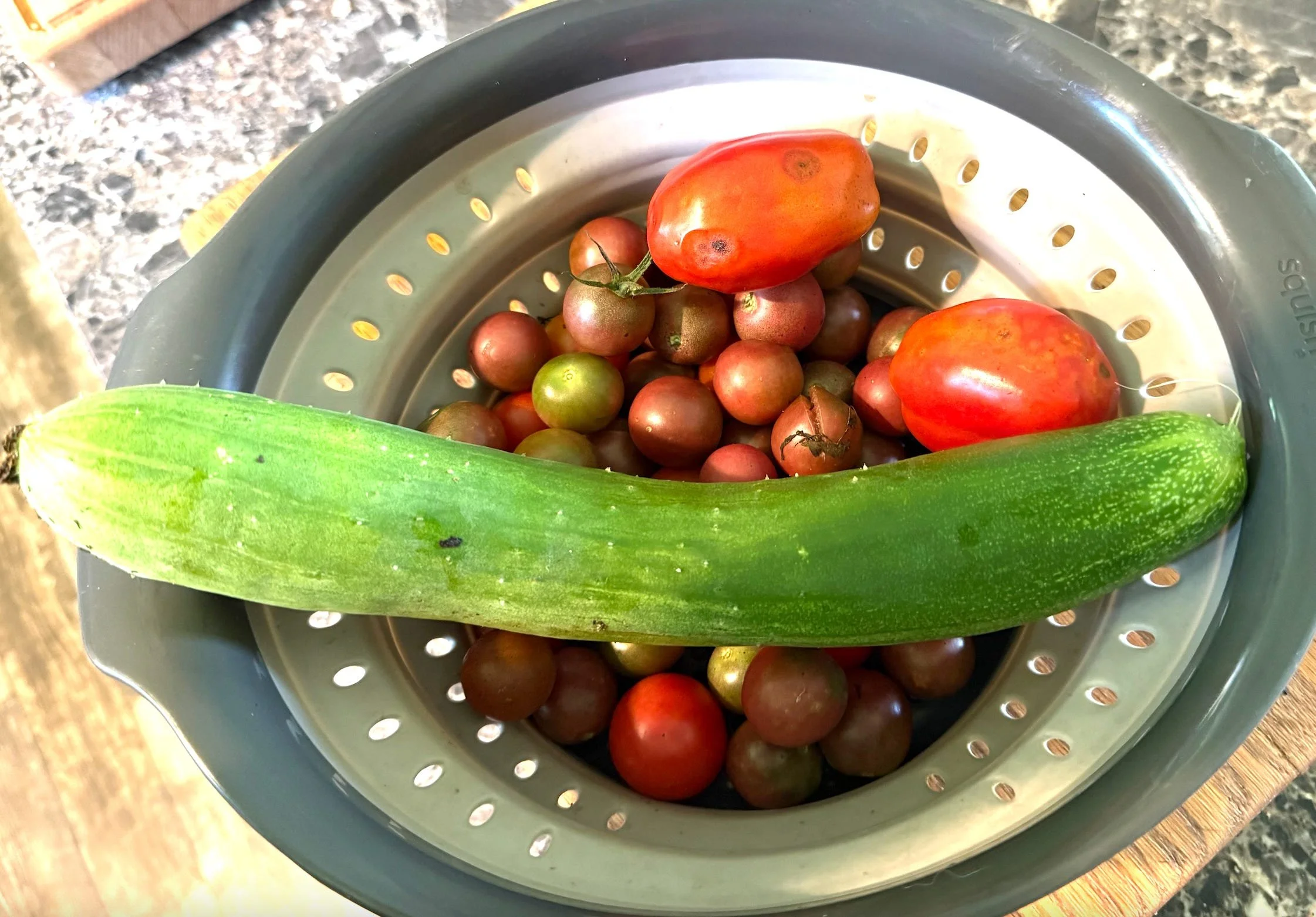
In the meantime, the tomatoes get harvested almost daily. The little cherries (this variety is called “black cherry”) are put into mason jars or freezer bags with some basil leaves and then frozen. During the off-season, they will be added directly to Italian food recipes or casseroles for extra flavor, antioxidants, vitamins, and fiber.
The farm’s garbage disposal:
Cucumbers are another issue. Other than eating fresh or pickling, there isn’t much one can do with a cucumber. Well… except feed them to chickens. Chickens will eat almost anything and everything - from bugs to offal to greens. We toss it in the coop, they eat it - and eggs are made!
With ten laying hens, we have an abundance of eggs. When we are home, the dogs get lots of homemade dog food, with eggs being the main protein source.
But in the meantime, Jill says that other than onions, we haven’t had to buy a vegetable all summer. The yellow squash and cucumbers abound. The pepper plants are doing ok, but not great - I think all the rain is too much for them.
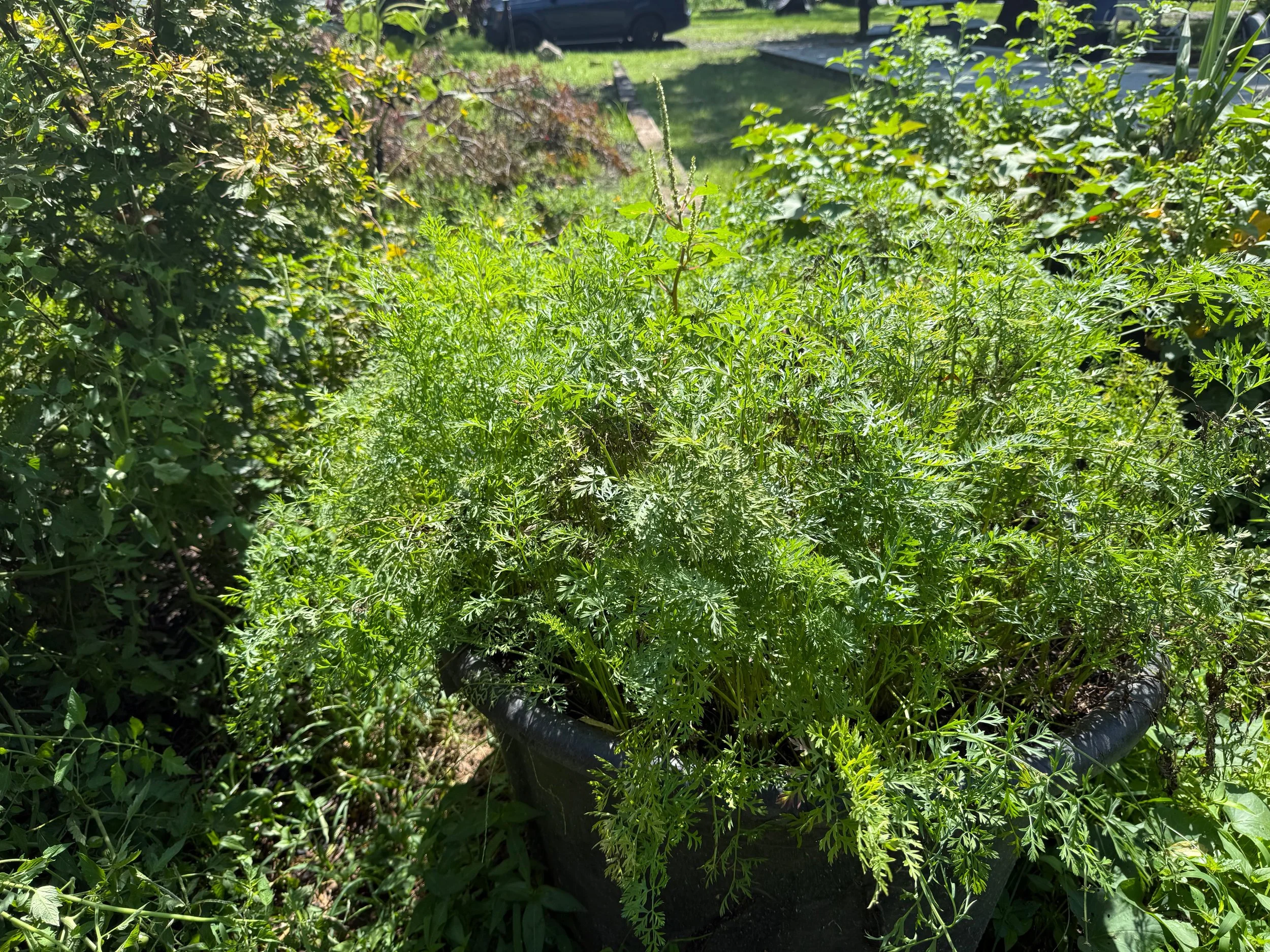
Even the carrots are continuing to produce. However, they are getting a bit woody - as the summer progresses
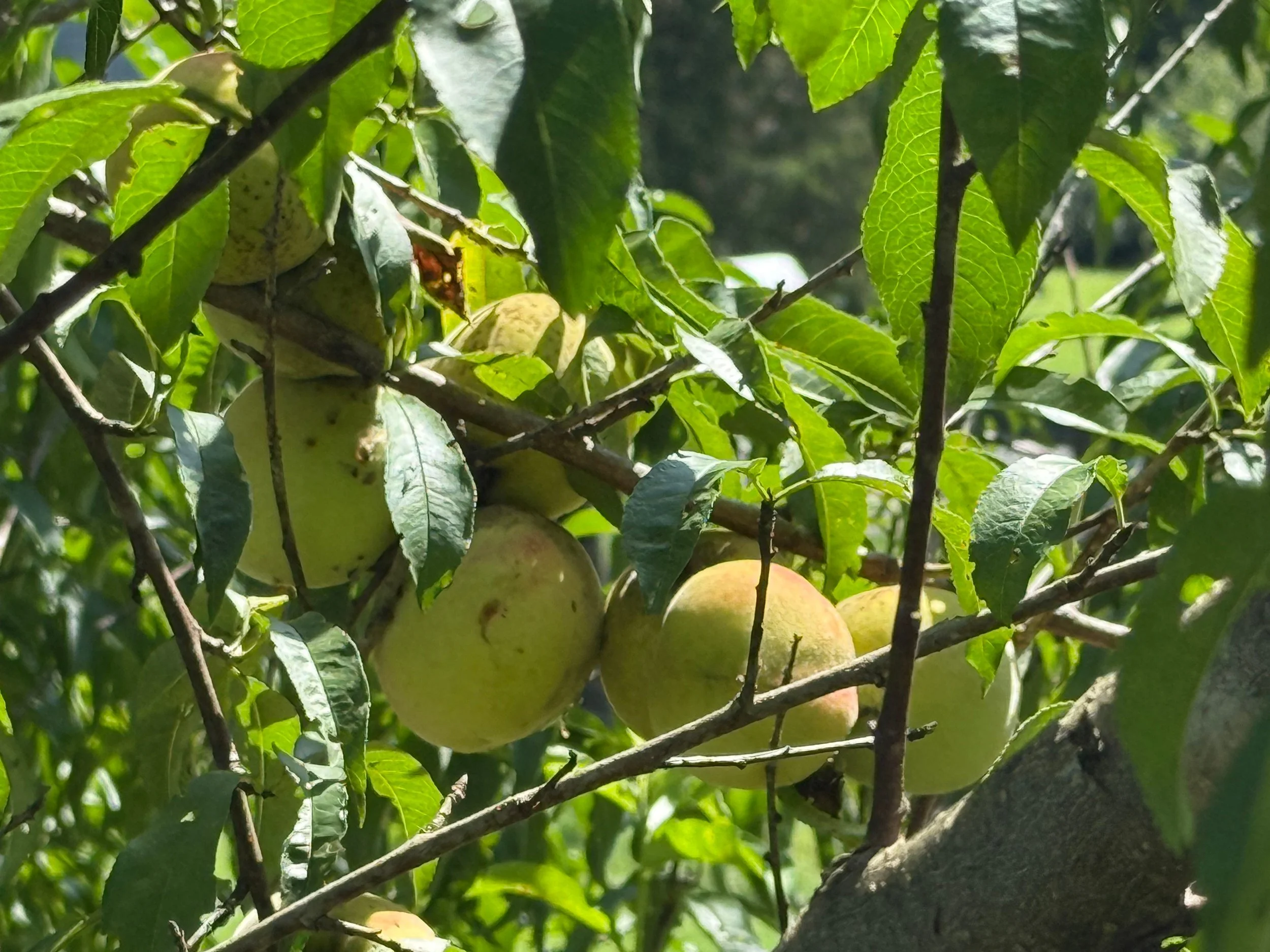
The peaches are coming ripe - finally!
Unfortunately, with all the rain, a fair number are rotting on the vine.
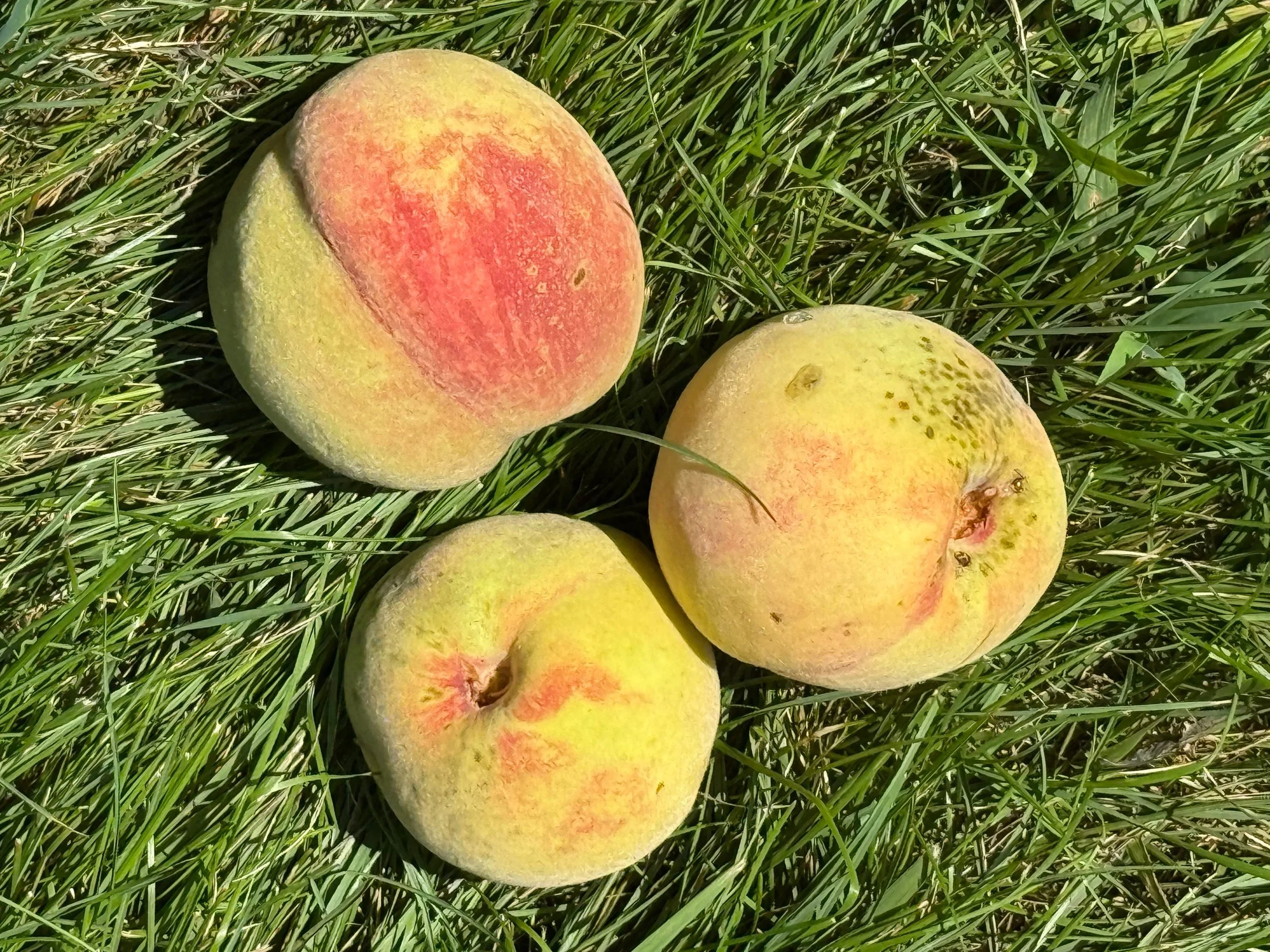
Ripe peaches off the tree have to be one of the most succulent foods in all of the world!
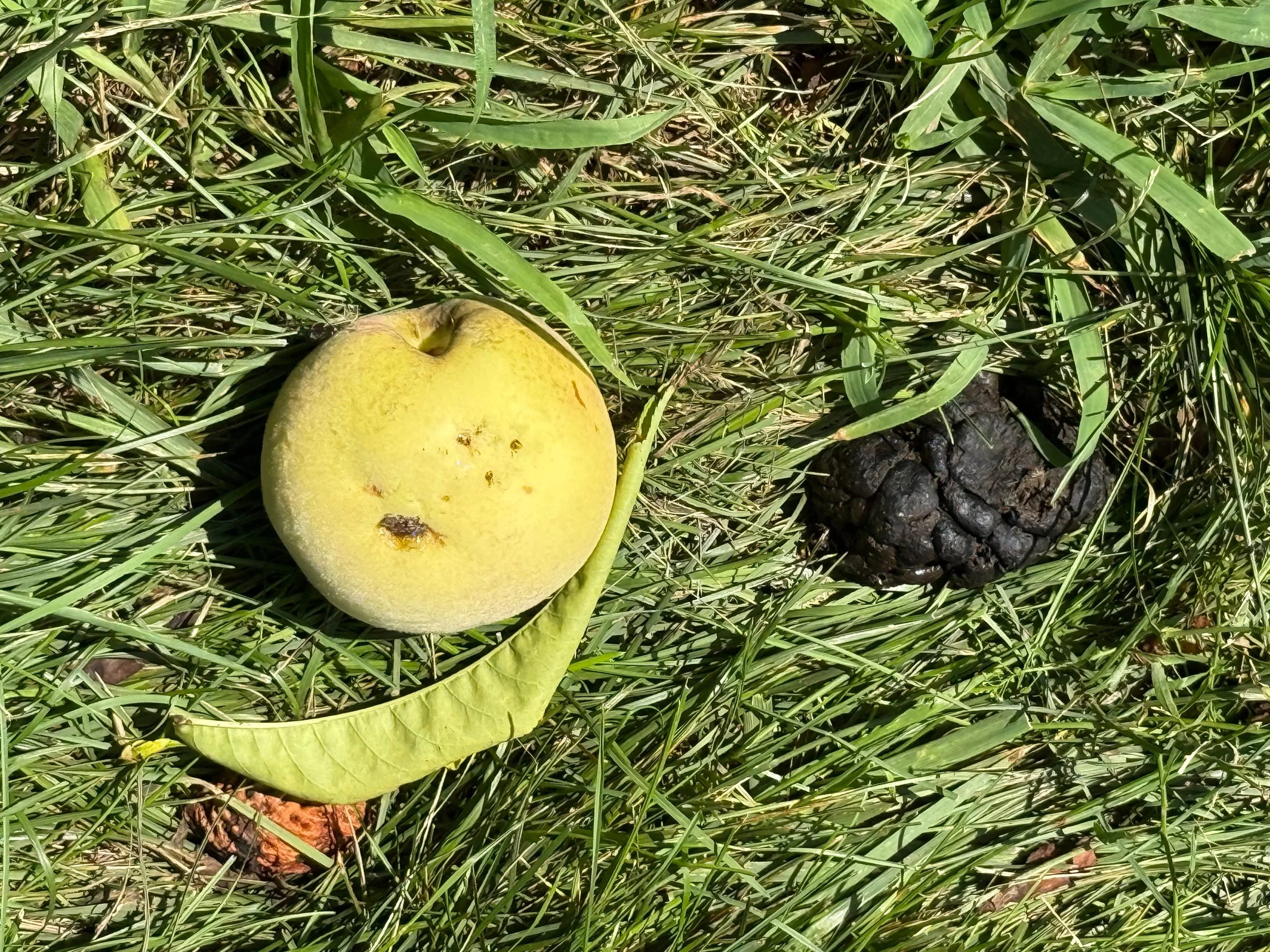
However, many of our peaches are also getting eaten by those rats with antlers - otherwise known as deer. The rather healthy scat everywhere is a tell…
Our dogs used to chase the deer off, but I kid you not, I think the deer are so numerous that the dogs view them as horses with antlers - just another variant of farm life these days.
The deer don’t hardly bother to run when we open the front door
The Horses
Earlier today, the farrier came out and put shoes on our stallion, Jade, and also on our older mare, Cara, whose feet are very flat - so she gets “stone bruised”, which is exactly as it sounds. Hence, she gets sore-footed easily, plus she has a permanent crack in her hoof wall, which will widen and make her uncomfortable if left unshod. She and Jade are the only two who get shod regularly; the rest go barefoot.
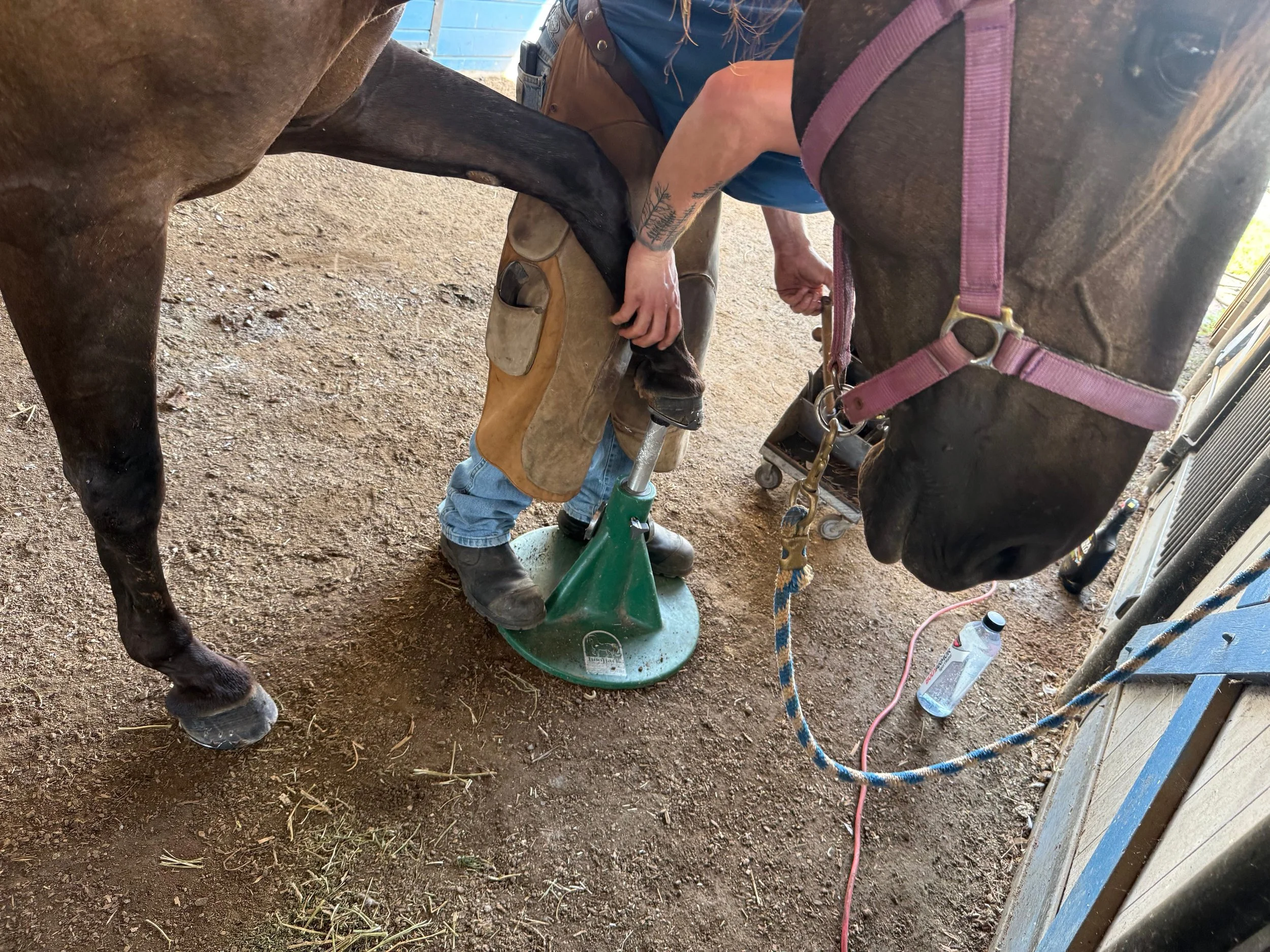
There is almost no more challenging job in the world than that of a farrier. It takes the patience of a Saint and an enormous amount of skill.
Cara, the mare pictured above, is a love. We have owned her for about sixteen years, and she is what we consider our “foundation” mare, as we have four generations by her.
We will be lucky if we get another foal out of her, but Cara will live out her hopefully long retirement here on our farm. We owe her that. Besides which, she is a beloved member of our family.
Later in the month, Jill will be taking Jade to a show - so lots of prep work to prepare for that!
The bees keep bee-ing.
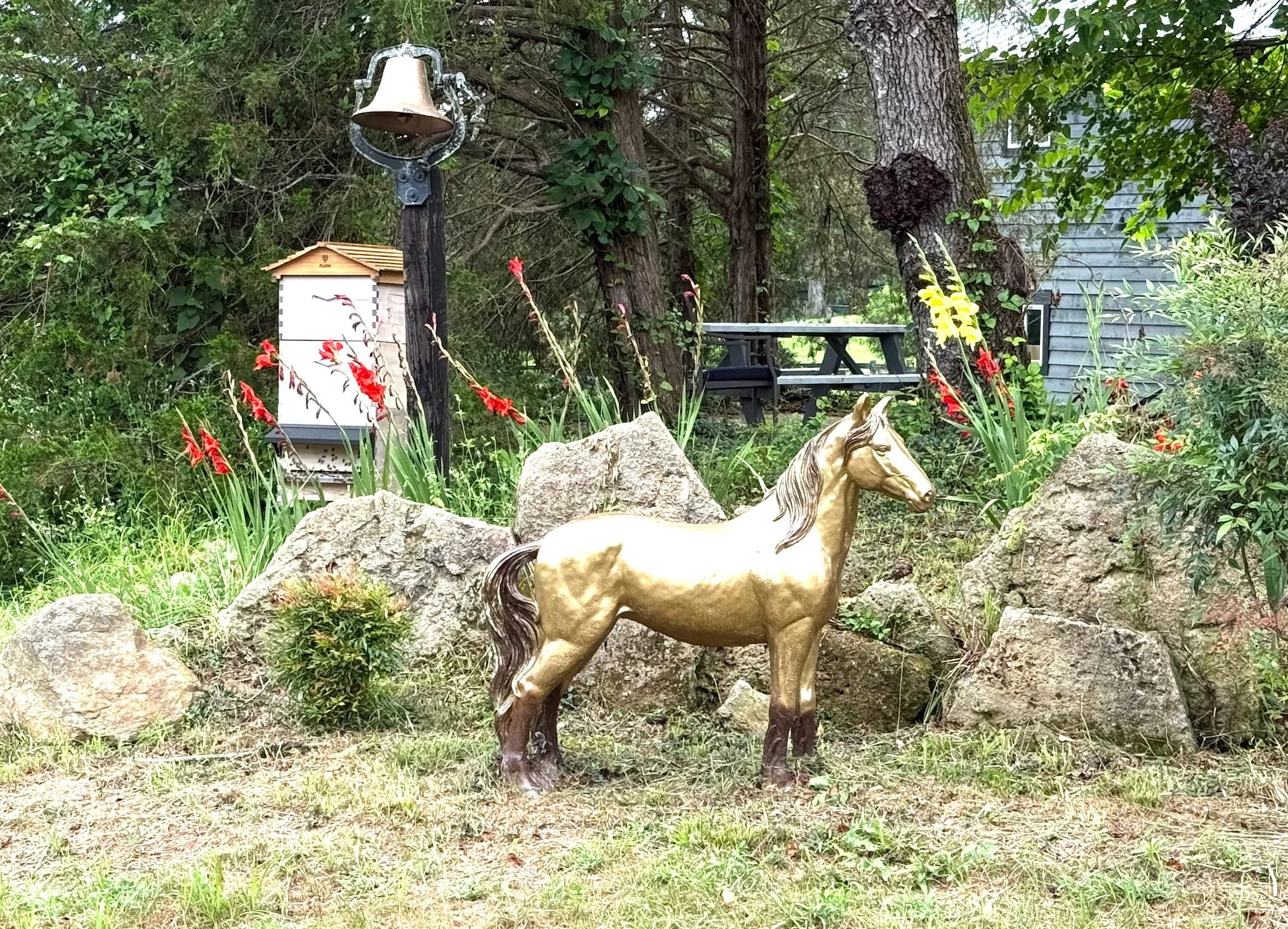
Gizmo and Gonzo:
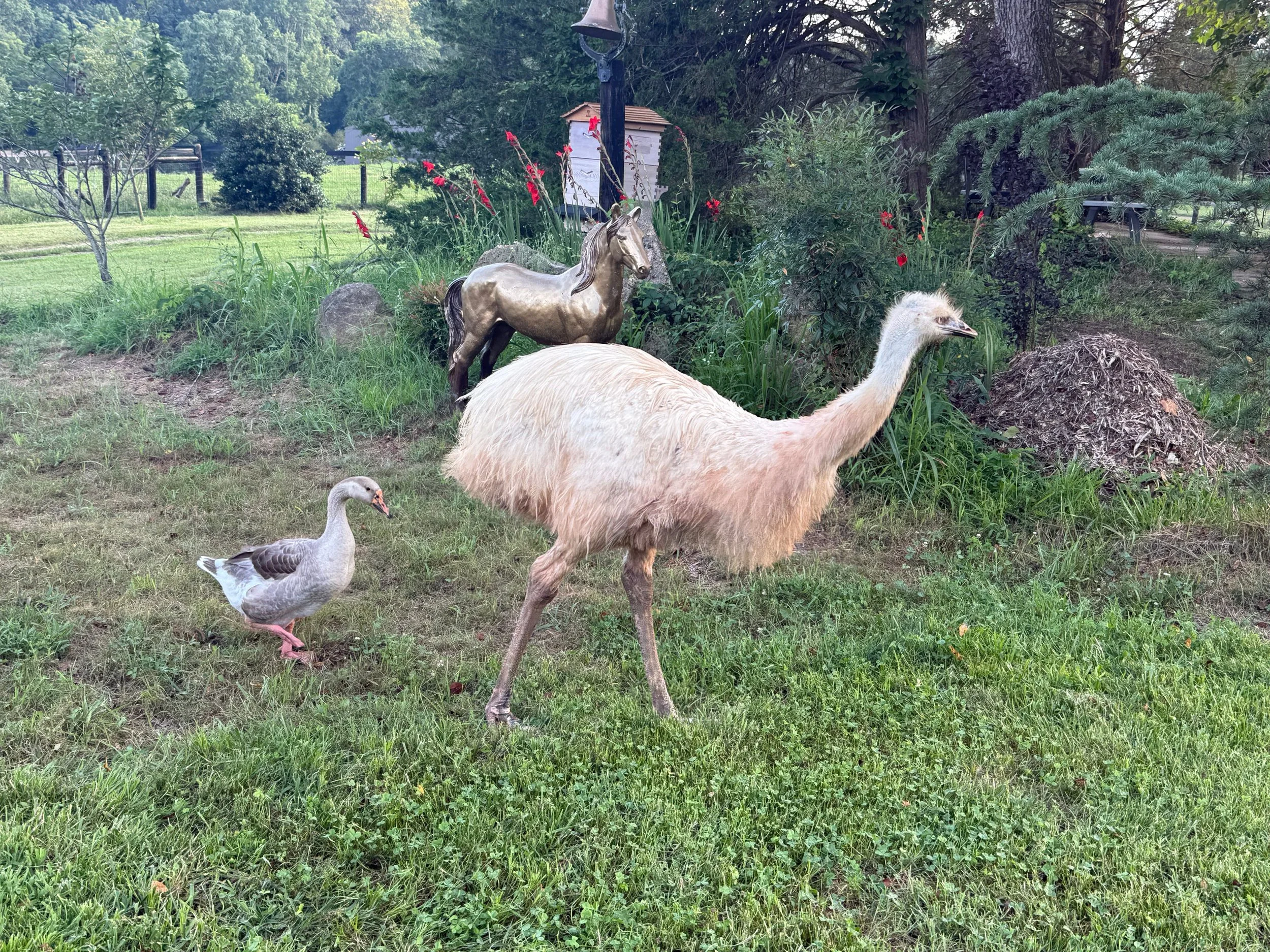
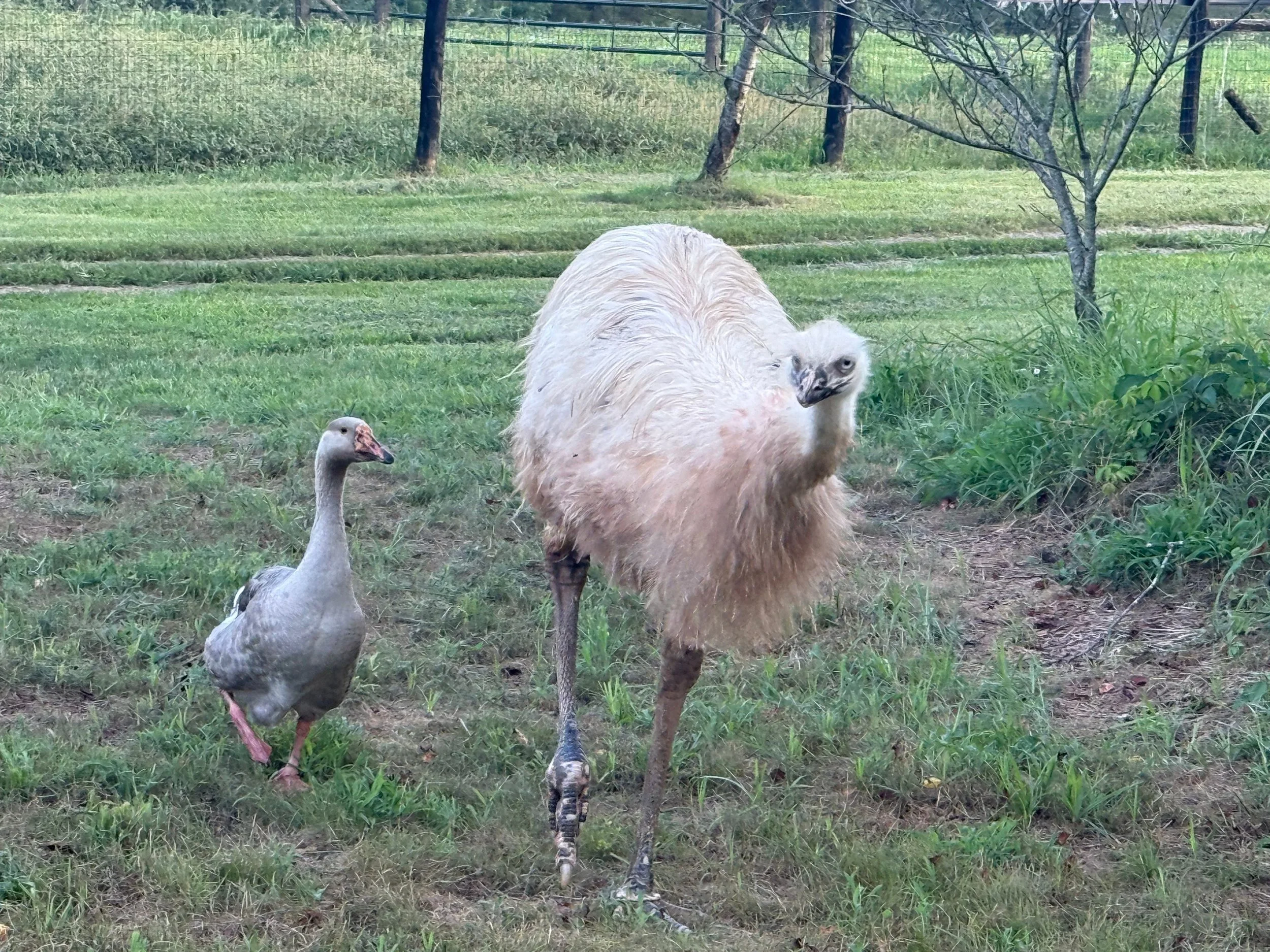
Goose and emu wander about daily - very happily. They are the most curious, self-satisfied twosome. With goose following just behind and always lock-step with emu. Curious about everything and anything. They are most content when they have people to hang with, but they find great comfort in each other’s company.
When we came back from our trip, both birds were genuinely excited to see us.
The goose talked and talked, honking excitedly. Gizmo is a very loud goose; she has lots to say, always. But when we came home, she told us over and over how glad she was to see us. Since we got home, the emu is even tolerating Jill hugging and petting her. Usually, she shies away from such attentions.

Generally, our dogs dote on being treated like babies, while the emu not so much…
The newest addition to the farm is Aslan (below), whom Jill found on Facebook Marketplace.
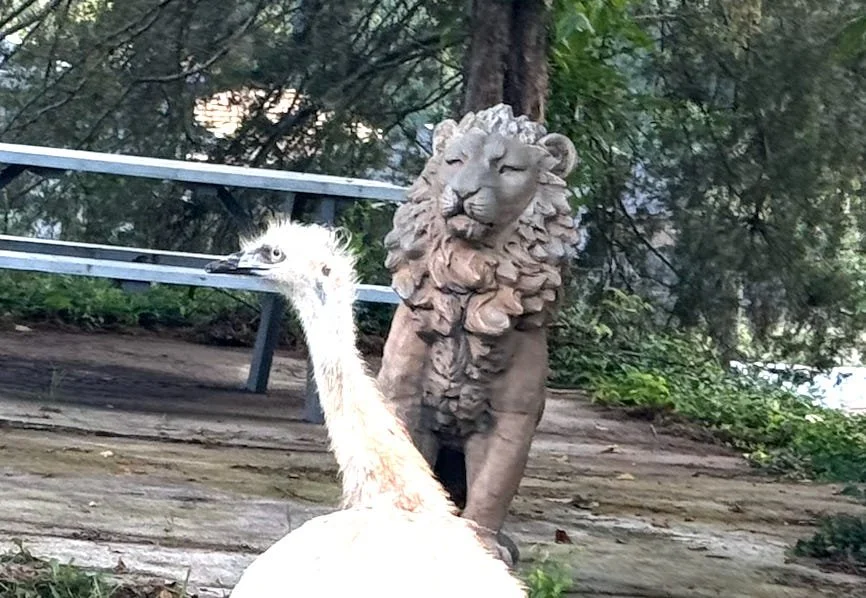
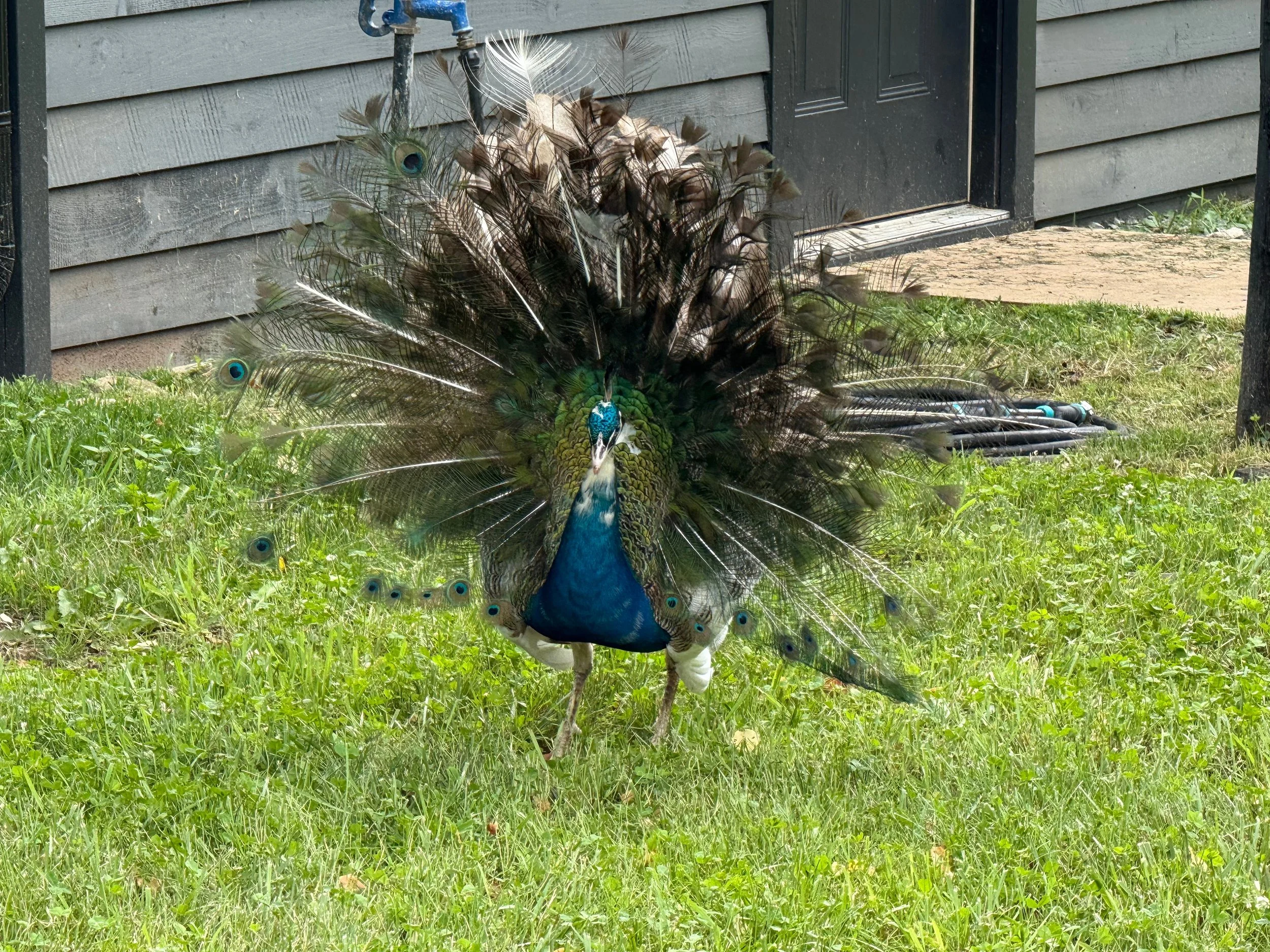
With that theme in mind, we have named our pied peacock - Prince Caspian.
Caspian is looking rather threadbare this month, as peacocks molt all their tail feathers post-breeding season.
Come this fall, he will have a freshly grown, gorgeous train behind him. This will be his first year for a big train, as he is now turning three years old. Peacocks mature later than one might think. So stay tuned.
On the very exotic home front, two of our banana plants in our greenhouse are producing bananas!
We are not optimistic that the fruit will amount to much- they already seem to be shriveling, but still, it is a first for us.
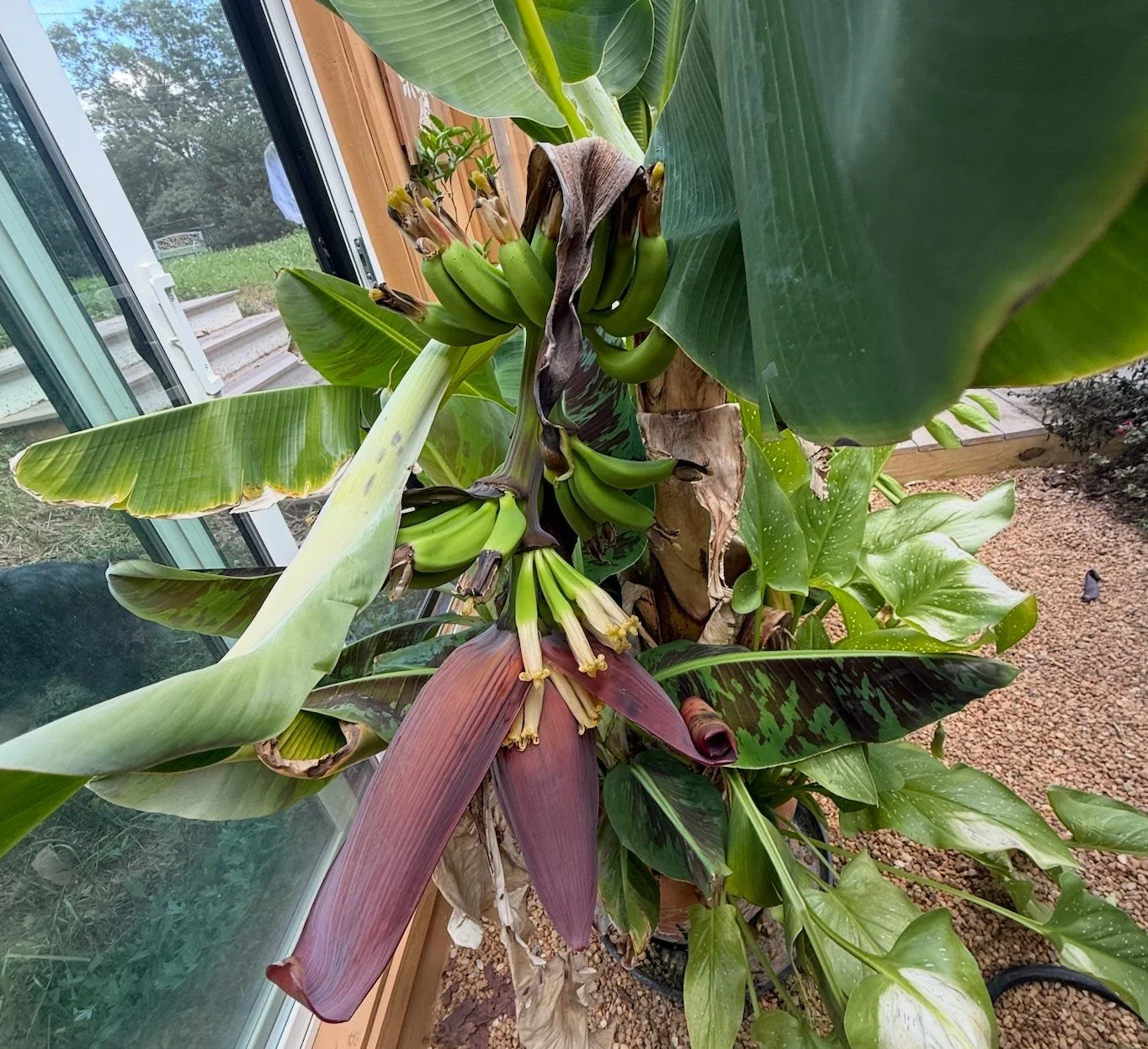
Notably, once a banana plant bears fruit, the main stem, known as the pseudostem, withers and dies back. Nevertheless, the underground root system remains and rapidly produces new shoots called suckers or pups, which develop into fresh banana plants.
Already, the main stem has flopped over, but the little bananas remain.
These plants have sadly outgrown their pots, so I am unsure of their fate. Most likely, they will soon be recycled with the young plants repotted.