Homesteading: Harnessing Horse Power
We do what we do.
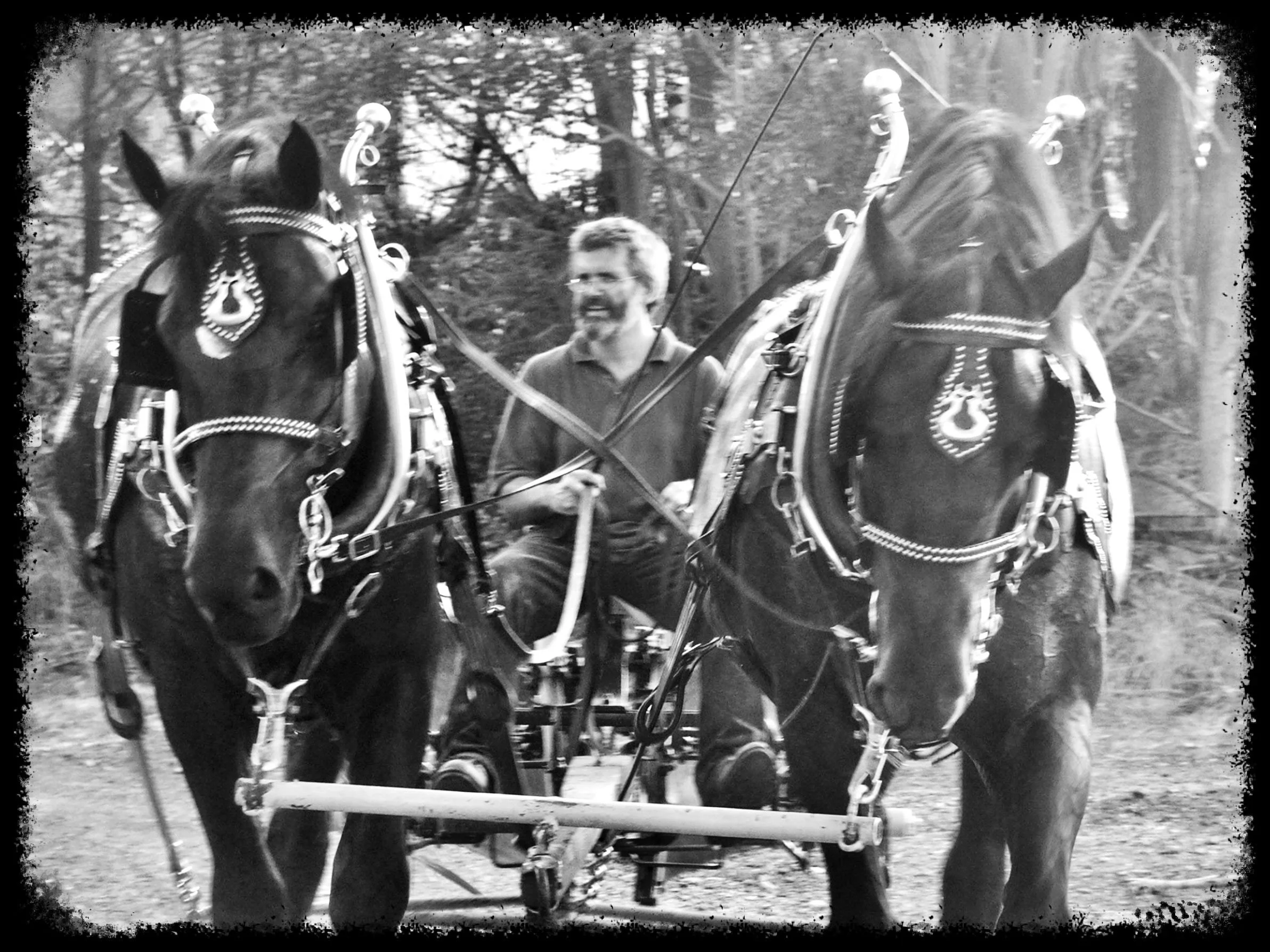
Twenty years ago, on our farm in Maryland - plowing with KatieSue and Anne
For decades, Jill and I have homesteaded our farm. We grow much of our own food, preserve food, and have chickens for eggs and meat. Some years we do more, some less. This year, our vegetable garden has been successful, with an abundance of produce and fruit frozen for future use. However, an early frost caused decreased fruit tree pollination, and subsequent heavy rain, combined with ant damage, ruined our peach crop before it had a chance to ripen. The bees are thriving, though, and we have high hopes for next year’s fruit crop.
We tried growing wheat this year, but day after day of rain this spring and early summer caused a black fungus on the grain heads, and we didn’t feel comfortable harvesting the wheat for food. So, even though the crop wasn’t a failure, we left it for the deer to eat. The plot of land worked for wheat and we plan to try it again, only this time planting winter wheat, instead of spring wheat, with planting to commence in November. So, I will till the soil- as the weeds are thick - plant the wheat, rake it, and then roll. This isn’t no till - but around here, once the weeds take over, the choices are to weed whip or till. Much of this will be done using the tractor, but upon reflection, I recall that we used horses for a significant portion of this work. In fact, we used to breed and train draft horses to drive, as well as offer clinics to others to learn to drive. We no longer farm with horses, but rely mostly on our own backs and the tractor.
But there was a time… We worked draft horses to farm, and we learned to plow from the Amish and old farmers decades ago.
What many don’t realize is that Jill was once an agricultural major at UC Davis and can talk the talk and walk the walk on the science behind homesteading, eating right, and why much of what she learned in college is BS. We often write about our adventures on our Substack. We just do it. Hard work keeps us young at heart.
The next book
We are in the process of writing a book about our homesteading adventures, combined with a emphasis on healthy living. Jill has been finding old photos and converting them into a usable format.
I thought we might share some of them with y’all today
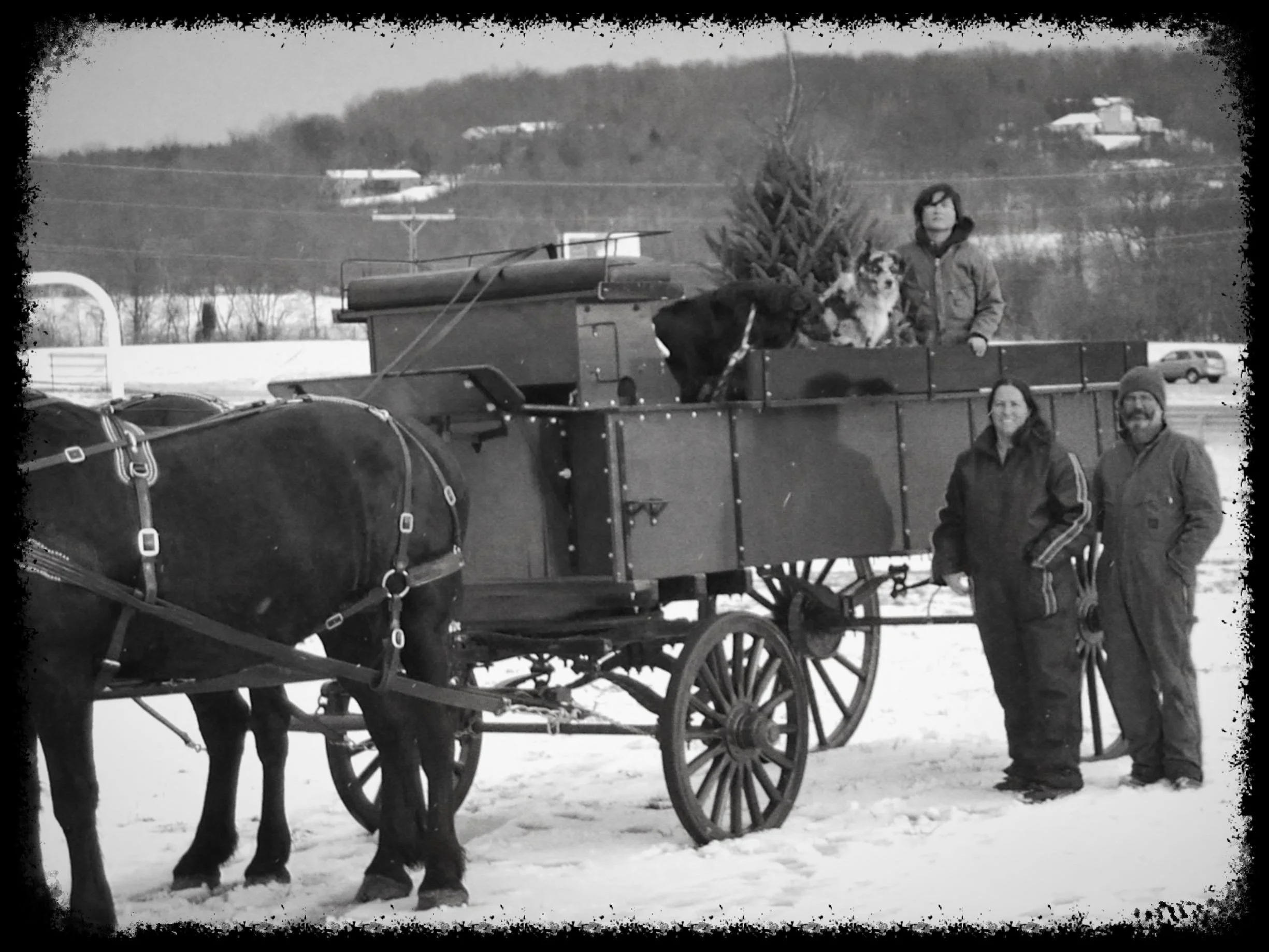
This photo was taken while driving a team into the small town of Jefferson, Maryland, to pick up a Christmas tree, circa 2005.
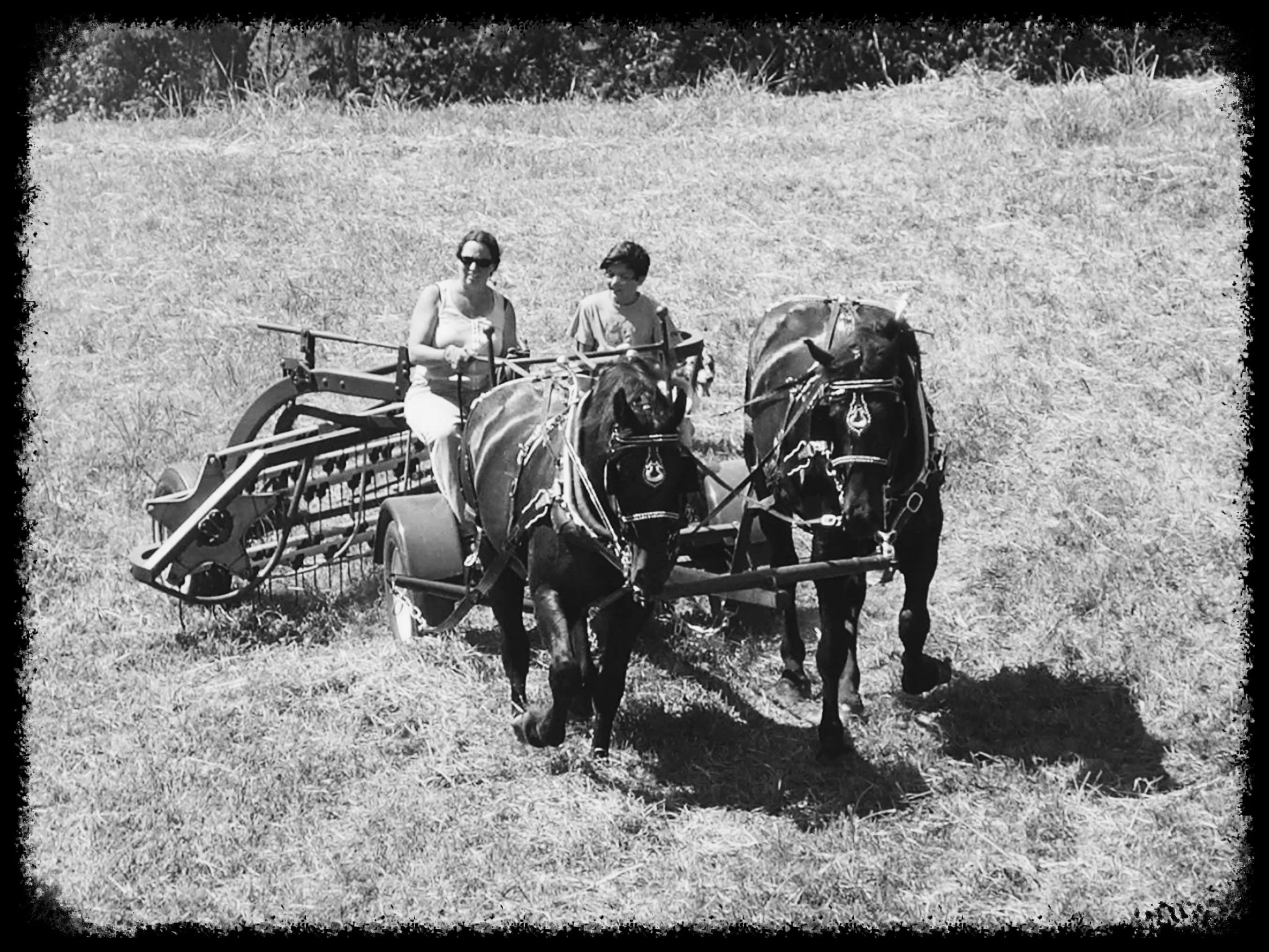
Jill and our youngest son are driving Percherons, KatieSue and Ann. They are fluffing the hay to dry using a tedder. Once the hay is dry, it has to be raked into a long pile (next photo).
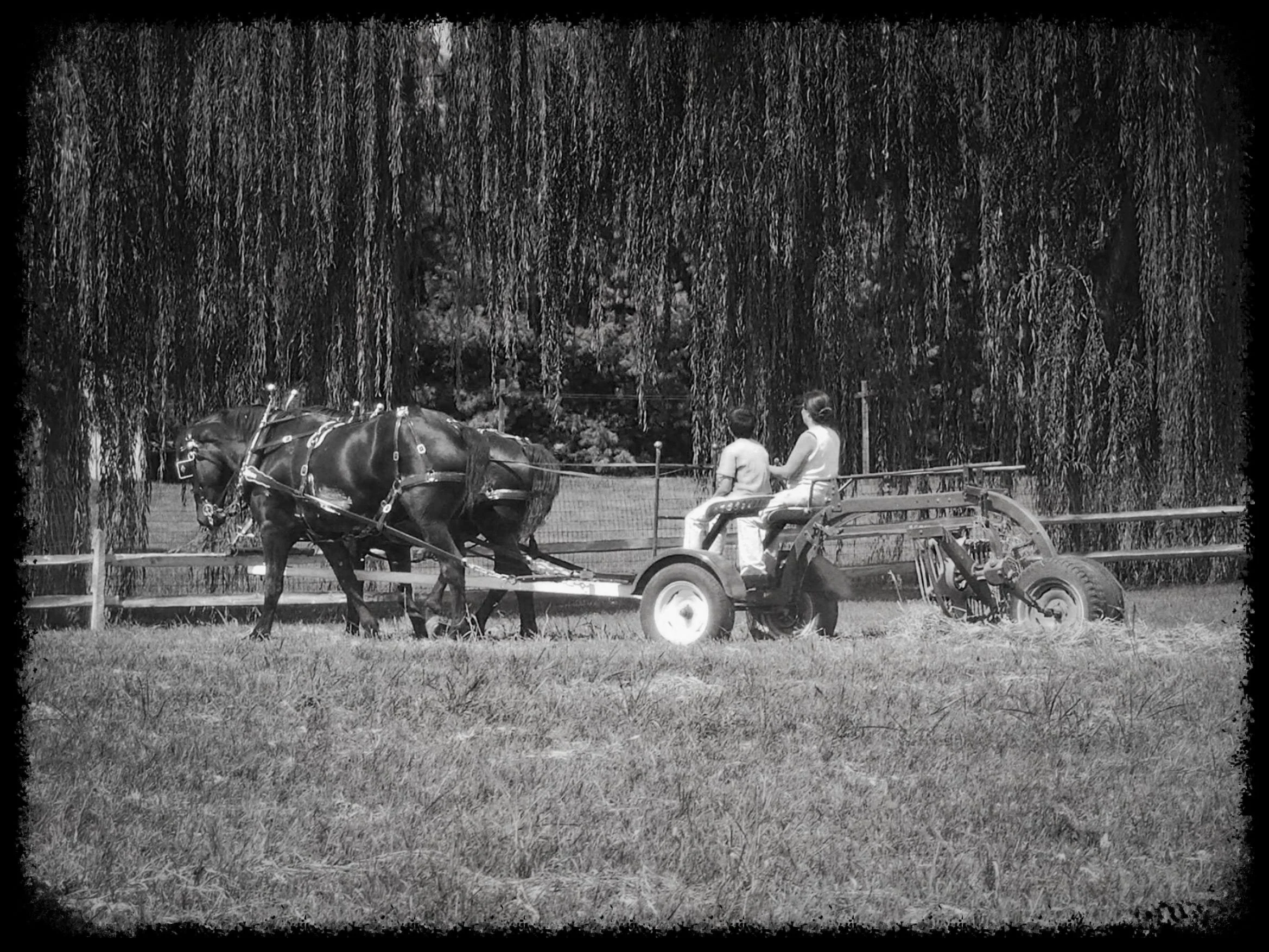
Jill and our youngest son are driving Percherons, KatieSue, and Ann. They are creating roll of hay using a hay rake for the baler to follow after.
For baling, we used to use an old tractor to make “square bales.”
“Anti-fragile competencies”
The comment below was in response to a post I made on X about working big horses, and it really resonated with me, as this was the primary reason why Jill and I started homesteading way back when.
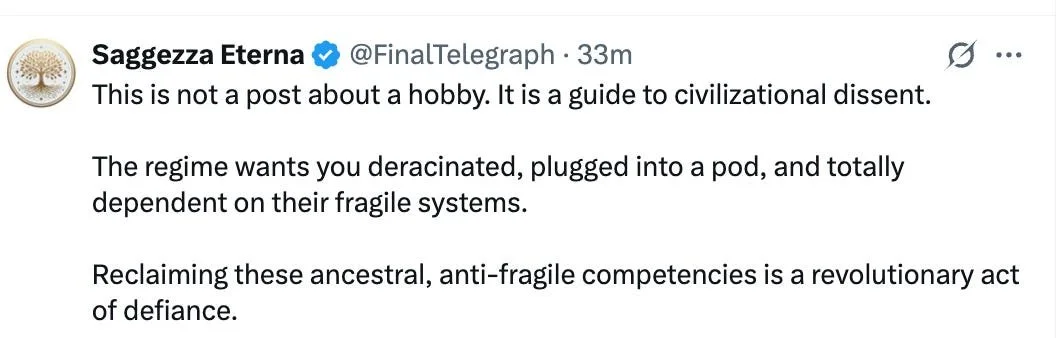
Our working the land and homesteading is about building and preserving skills handed down to us by our forefathers. Skills that have developed over thousands of years. This is our heritage that has kept people surviving and will continue to keep people thriving long after we are gone. A great forgetting is happening fast, and we must all fight to keep these traditions alive.
It is not a given that our industrialized societies that are dependent on energy, computers, wireless technologies, satellites, etc., will continue. Nations fall, technological advances and skills get lost. Totalitarian regimes can rise up, governments that don’t care about anything but power. In the past, there have been many periods of a great “unknowing.” Nothing is certain in life or in nation-states. A de-evolution of society could very well be in our future.
Furthermore, our government has implemented a societal plan created in the 1960s, which involved creating industrialized foods to feed the world. “Food” that is lacking in micronutrients and protein. Agribusiness now utilizes natural gas as the primary feedstock for the most common fertilizers, serving both as an energy source and as a source of hydrogen.
Traditional farming methods - now re-labelled as regenerative farming- are the solution on an individualized basis. We can control our own destiny, even if we can’t all change the direction of farming practices in the USA and the world.
Do you want to learn to work drafts?
Turning to learning to homestead using horses or mules. Well, it helps to have some horse experience, but it isn’t an absolute.
These skills are rapidly dying out, so you will have to ferret out resources in your area. To do this, check if your state or region has a draft horse association and then consider becoming a member. Be sure to attend the meetings and find people who work the land (particularly those who farm) and ask if you can volunteer on their farm to learn how to drive.
Some associations have “farm days” or similar events - go and volunteer, get to know the people involved in your area. Those involved are usually thrilled to have someone to teach - if that person is serious and responsible. The Workhorse Handbook is a great resource (out of print, but used copies are available if one looks), as is the Draft Horse Journal (although that has become more about showing than working horses). But it is still useful. Additionally, finding back copies from many years past of this journal on eBay, when the journal focused more on working horses, may be useful.
Many state fairs still have draft horse shows. Go to these events and then find the stables, go talk to people who are driving and working horses. Again, volunteer to help on their farm or to help show. Learning how to hitch is one of the most complex parts, so even just helping to prepare for a show can a great learning experience.
Of course, working horses is not necessary for homesteading. Homesteading is something we can all do.
If you think you can’t do it, you are wrong. It takes time to learn the skills, but start small and gradually build a solid foundation of knowledge. Expand your operation each year, improving and learning as you go.
Even a backyard in a subdivision can yield significant produce, and most suburbs allow a few hens to be kept. It is entirely possible to regenerate the earth, whether in a raised bed or a traditional garden plot, to yield produce with significantly higher nutrient levels than one can buy at the grocery store.
If you haven’t seen the documentary Food, Inc., which is now almost a decade old, please do. In my opinion, this is the movie that first opened the eyes of many. The trailer for that film is below, and the full movie can be found at the bottom of this essay.
Where to homestead?
If I were going to start homesteading now and I was resource limited - I would look at WV, NC, SC, GA, N. FL or even parts of TN - in areas where land is cheap, the weather isn’t too cold, and there is plenty of water. Our first farm featured a house and outbuilding that were literally falling down - but the land was wonderful. Frankly, the same could be said for the farm we own now.
A FSBO (for sale by owner) - on land that banks won’t lend on- can be a great option. Banks don’t like houses that won’t pass inspection, trailer homes, plots of land that are either too small for Big-Ag or not commercially viable for Big-Ag. These are all excellent retirement options as well.
Another tip: A modern single-wide is energy-efficient and can often be picked up cheaply in foreclosure. Don’t give up -even if you have to lease a crappy old house on a couple of acres. It can be enough to get you started. We started out rebuilding our current farm by living in a used construction trailer.
And don’t give up, where ever you are. Just do what you can to make it happen.
A few more photos from our collection:
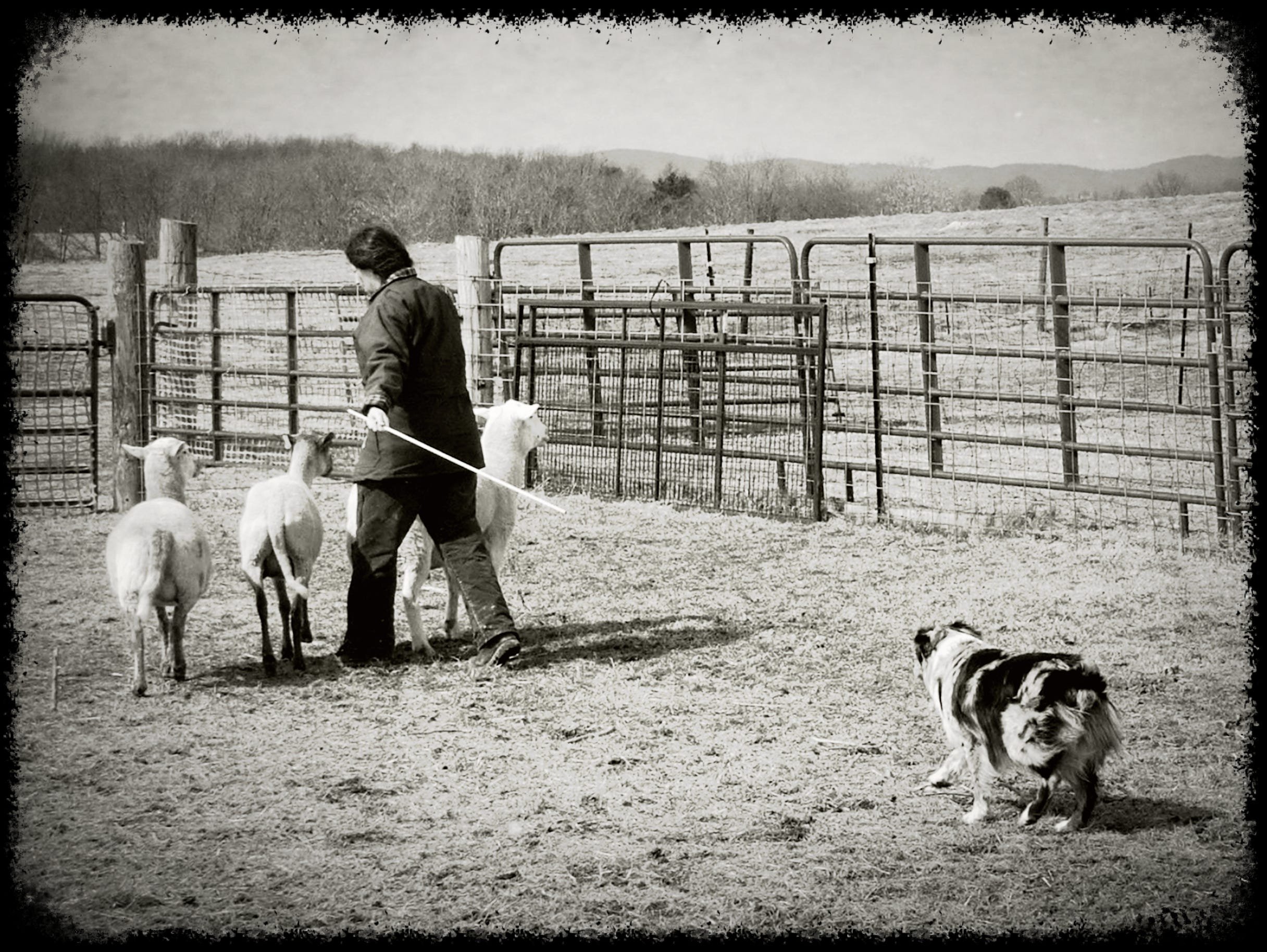
Jill and Luna, the grandmother of our current girls, working sheep. A good dog, that can guard livestock and chickens, keep the deer off the crops, even move livestock is worth its weight in gold.
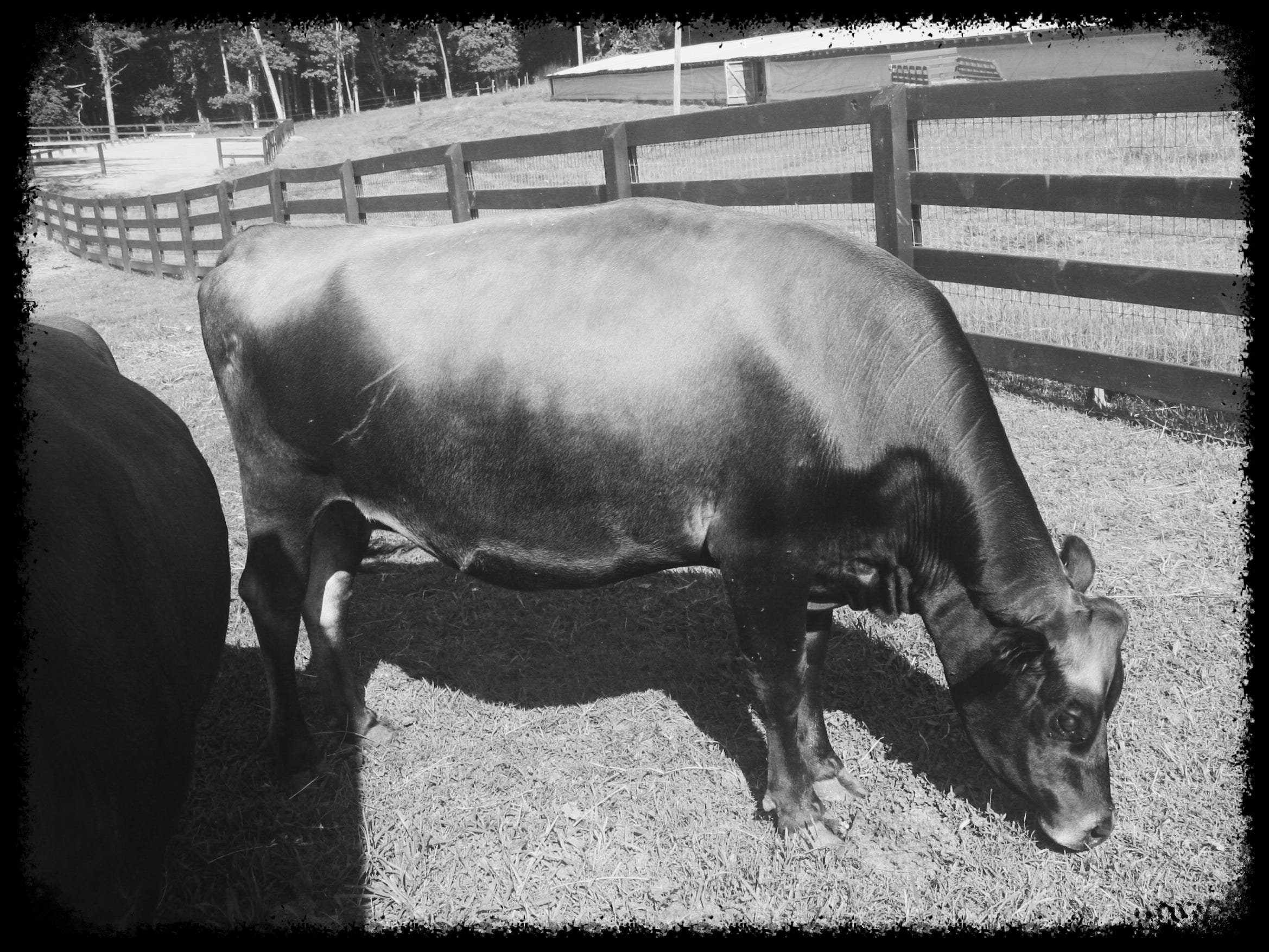
One of our mini-jersey cattle. These are very profitable to breed, with a strong consumer demand- if they are A2/A2 (the milk is very digestible), polled, and small enough to meet the breed standard. They also produce too much milk for one family to use!
We plan to once again get a couple of cows - although the timeline for that keeps getting pushed back, as our workload never seems to decrease!