Homesteading: Home Again, Home Again
The wonders of dairy
We got back home from the Netherlands yesterday evening. Having left early Friday afternoon, arriving Saturday morning, and coming back yesterday, the trip was not an easy one on our bodies or on our minds. But we seem to be bouncing back today, and as Jill and I both have a full schedule.
On the home front, Jill has found two little mini jerseys to buy - the sale is pending DNA results. These will be companion animals for our stallions, who live alone and will be bred when appropriate. Mini jerseys need to be under 40 to 44 inches at the highest point of the hip.
We are buying the cows from Lindsey, who breeds mini Jersey cows.
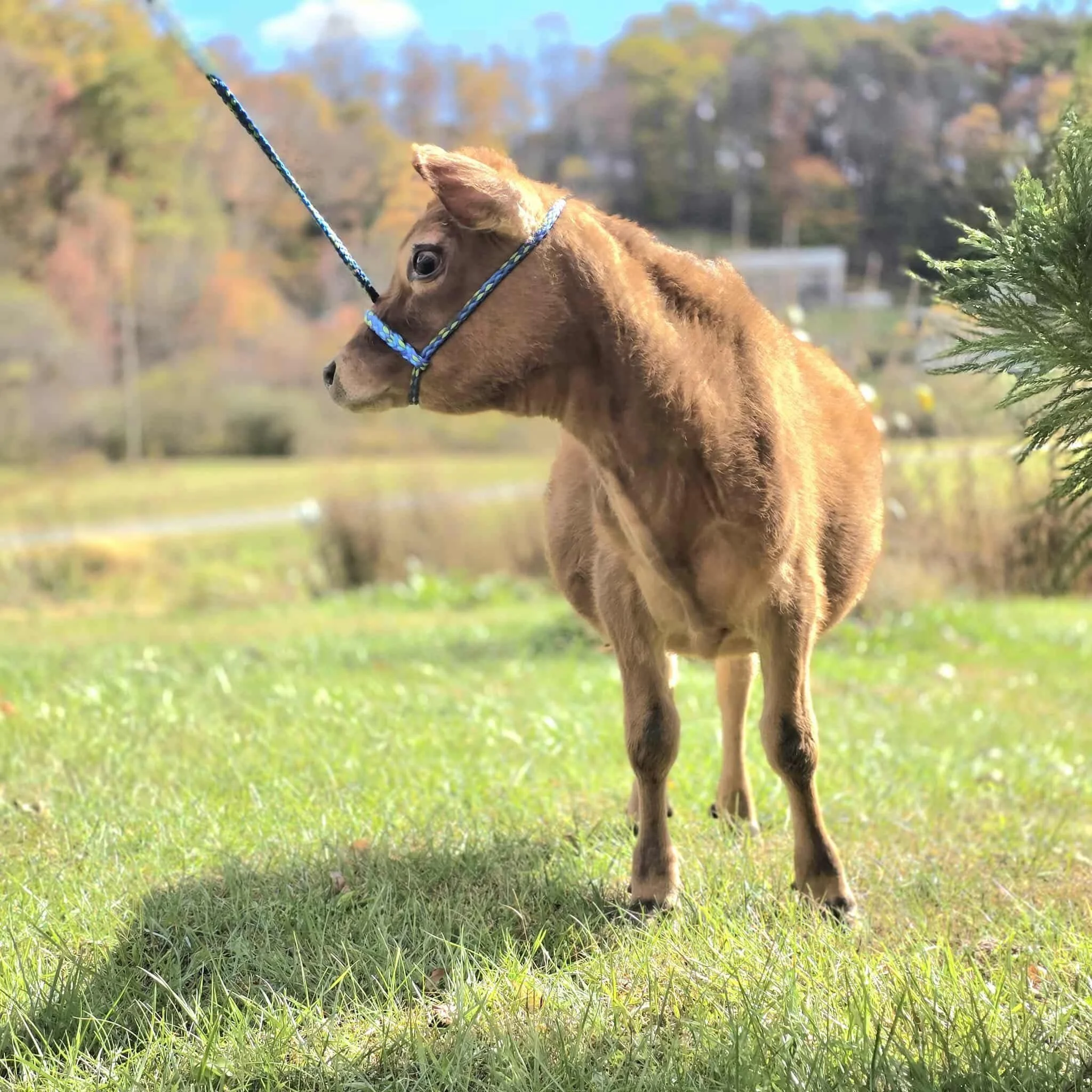
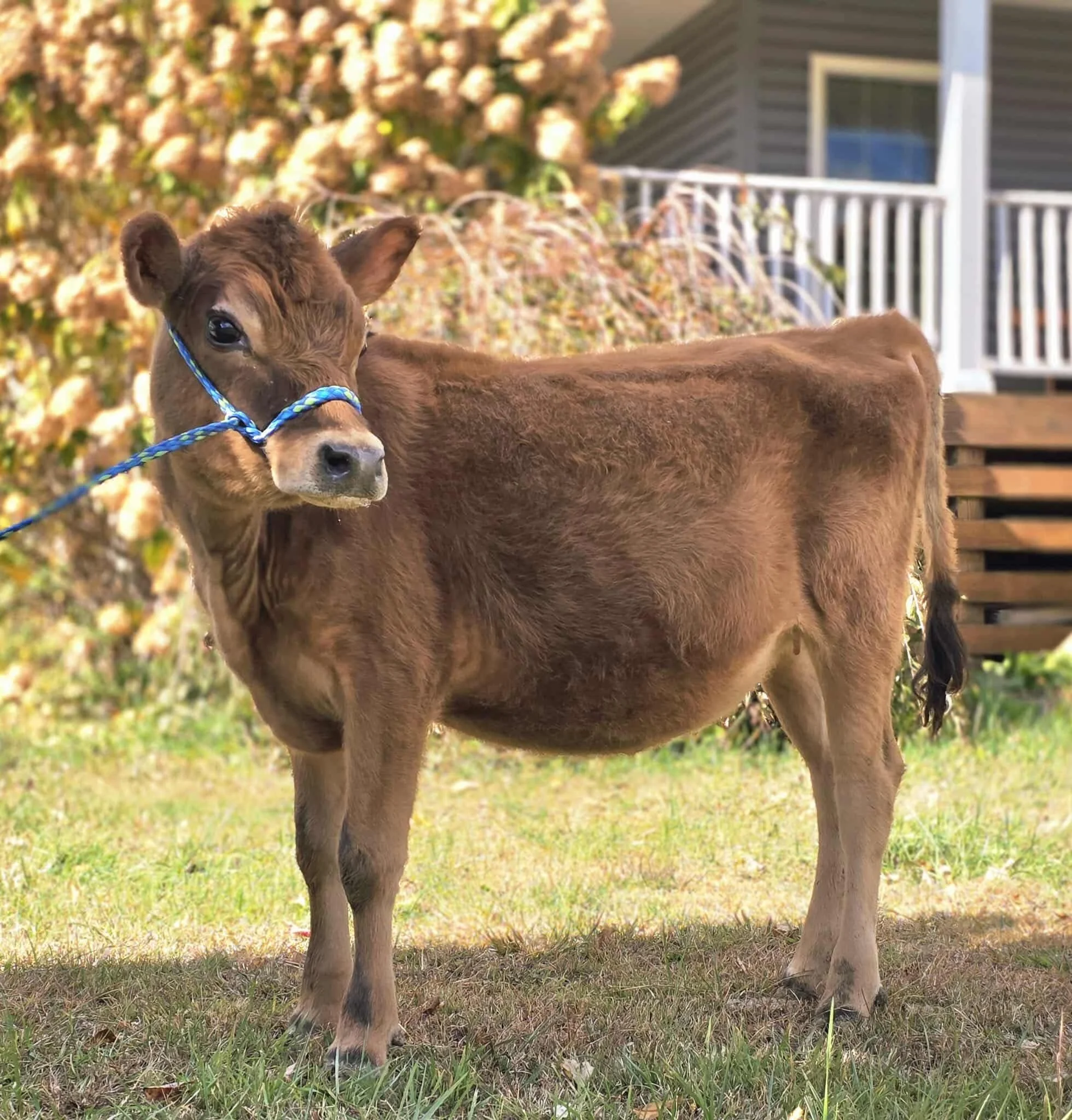
The first cow is a very tiny heifer - about a year old. Really still a baby. She won’t get much higher than 36-38 inches at the high point of her hip.
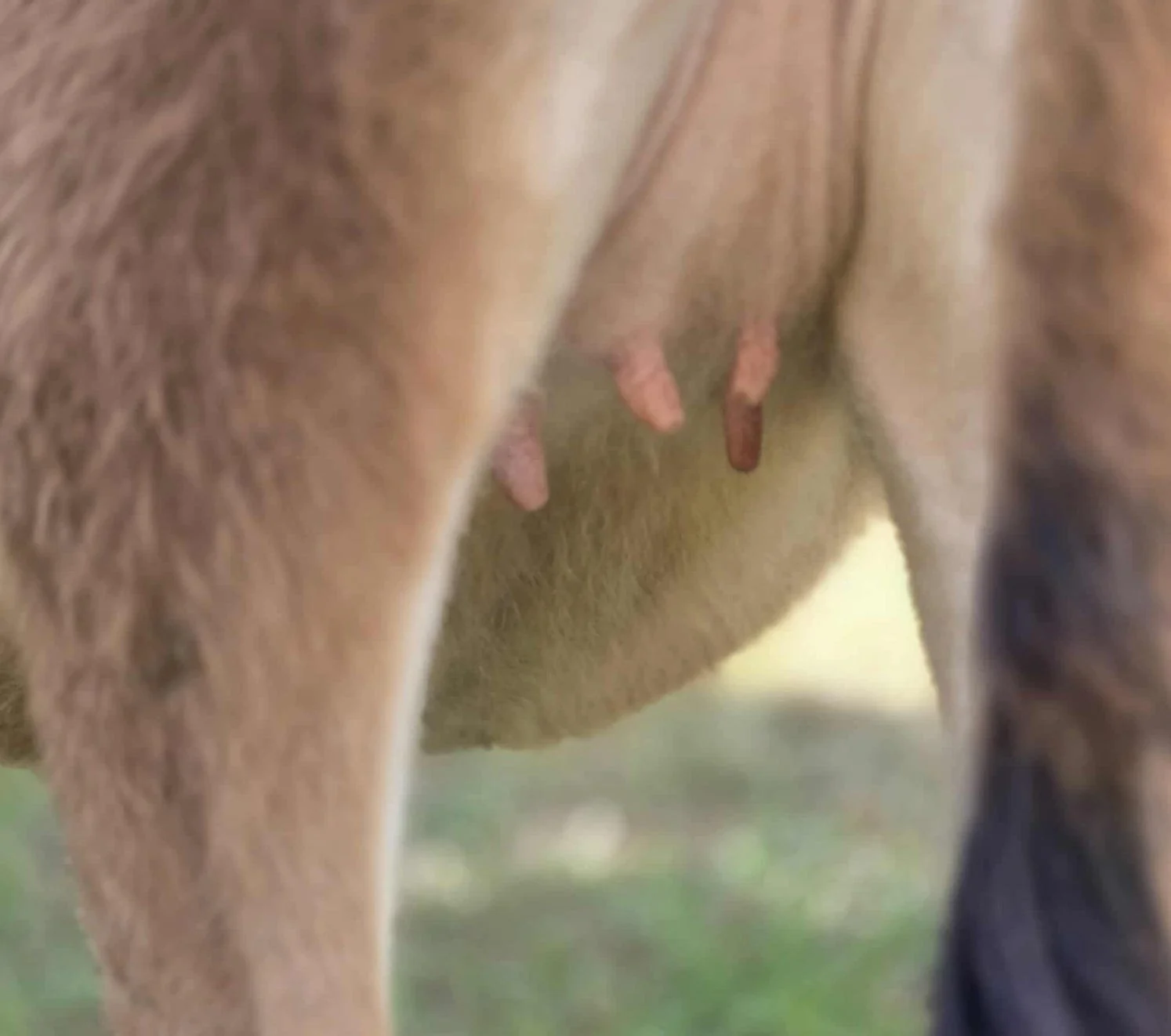
The photo below shows that she has all four teats in the right place and the "quadrants” are about of equal size and shape, as this is important for milking.
The other cow is a mature animal. She is exceptionally friendly and will be an ambassador for the farm. She has been with a bull and never came up pregnant, so we will be trying AI (not that kind of AI - but I refer to artificial insemination). Her owner lives in WV and has no access to a good repro vet, so she is sadly selling her to us. Evie will receive a hormonal work-up when she gets here and most likely will require some hormonal supplementation (progesterone, most likely) in order to take. If she doesn’t, well, every farm needs a greeting committee!
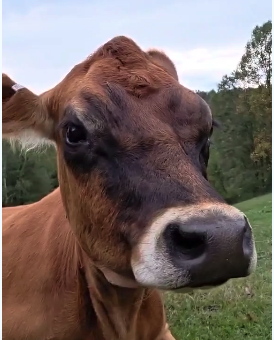
But how can you resist this face?
I look forward to the day, which will most likely be a year and a half down the road - when we will be drinking milk from our own cow again.
“About Raw Milk?”
We get asked that question fairly frequently. Yes, we drink it. Right now, we don’t have a good source, due to our travel schedule and not being able to commit to a pick-up day each week. But Jill has arranged for a cow share to start again in December.
Right now, we buy local milk, which is low-heat (vat) pasteurized. Vat pasteurization most definitely tastes different from ultra-pasturized, and the milk does retain some enzymes. It also goes sour just a tad quicker, too. As we live in Virginia, we have access to good, local dairy, but that is not true for all areas of the USA. So, if you can find a local dairy that sells vat pasteurized milk, that is a good alternative to raw. Raw also can be very expensive and hard to find.
The legality of raw milk sales in the United States varies significantly by state, with regulations covering retail, on-farm, off-farm, and herd-share sales. A total of 29 states allow some form of raw milk sale, though the specific conditions differ widely.
The eight states that allow unrestricted sales of raw milk are California, Maine, New Hampshire, New Mexico, Pennsylvania, South Carolina, Utah, and Washington. An additional 13 states allow the retail sale of raw milk but impose various regulations, such as requiring producers to hold a license or limiting sales to specific locations, such as farms or farmers’ markets.
If one is going to buy raw milk, visit the farm and learn about their sanitation practices. As long as the farm is producing high-quality animals, keeps their facilities clean, cleans the udder, the milking stall, and the machinery appropriately before and after milking, and does the required testing, etc., the chances of getting salmonella, E. coli, or Listeria are minimal. Truth be told, bovine TB has never really been an issue.
I had CHAT-GPT perform a brief risk-benefit analysis on drinking raw milk, and this is what it generated:
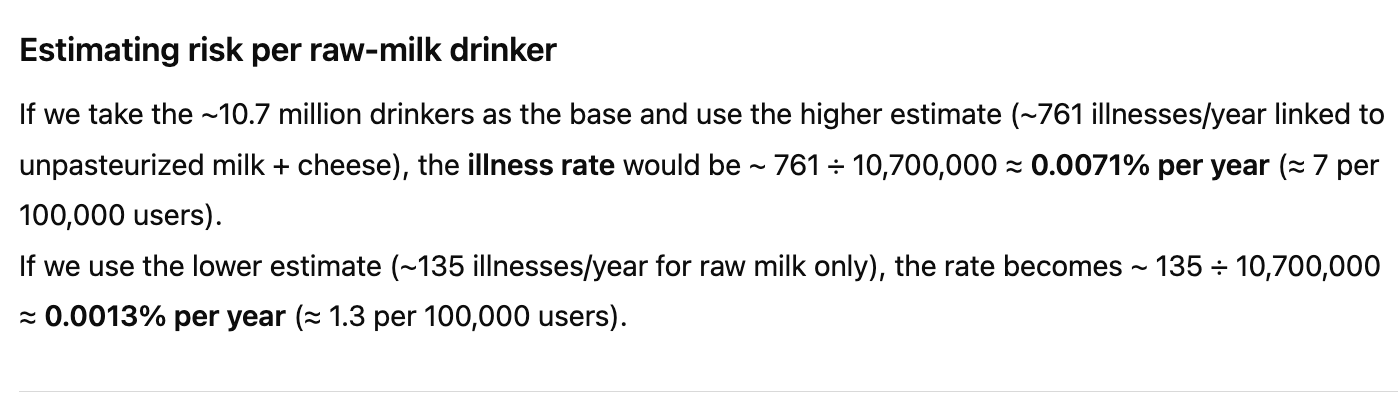
One has to wonder what all the fuss is about.
Common sense is not common in many state governments. That would be in the 21 states that have outlawed the sale of raw milk.
A little water-milk in your coffee?
Thinking of milk brought to mind our recent experiences in Europe.
Hotel coffee in Europe has become rather blech. This is due mainly to reliance on Illy Coffee and the robotic coffee machines that have become de rigueur in hotel buffet bars worldwide.
The main problem being that hotels use low-fat and skim milk in their automated coffee machines. So, not only are the beans ”hotel quality,” the milk is… basically one step away from being milk-water (or is that water-milk)?
This is not just true for hotel coffee; using low- or non-fat milk, it has become the norm at most coffee houses throughout Europe and the United States. So, when ordering a “flat white”, cappuccino, or latte, be sure to specify “whole milk” when ordering.
Whole, full-fat milk is healthy.
Do not fall for the hype about low-fat and no-fat milk being better for you or your family. First off, the fat in whole milk slows digestion and helps keep blood sugar levels more stable after eating. This can reduce hunger between meals and may help prevent overeating compared to low-fat or fat-free dairy.
Jill and I drink our coffee with full-fat milk in the morning, which lets us wait until after noon before eating. It also helps a little with the absorption of the various supplements we take. So, our fasting isn’t completely intermittent, but it seems to work for us. BTW- as much as we love half-n-half, the calorie load of that in our coffee is a little excessive, given how much coffee we drink.
Whole-fat milk contains beneficial fatty acids, including conjugated linoleic acid (CLA), which has potential as an anti-inflammatory and anti-cancer supplement (ref). Omega-3 fatty acids are found in full-fat milk, especially in grass-fed milk, which supports cardiovascular and brain health. Short- and medium-chain fats (like butyric acid) in milk fat also support gut health and metabolism.
The vitamins A, D, E, and K require fat for absorption, and full-fat milk is perfect for that. Skim and low-fat milks remove most of the fat, which can reduce uptake unless the milk is fortified. Remember that maintaining adequate vitamin D levels is a critical component to building a healthy immune system.
Contrary to old assumptions, many large studies (e.g., American Journal of Clinical Nutrition, Lancet, European Journal of Epidemiology) show that full-fat dairy does not increase cardiovascular disease risk and is heart-healthy when replacing refined carbohydrates.
Cholesterol and saturated fat in milk are structural components of cell membranes and hormones; these are especially important for children’s brain development, cognition, and reproductive health, including hormonal regulation, in adults. Having children eat fat-free dairy products is just not a good idea.
Now, the big food industry that manufactures fake foods has made a vast fortune selling Americans on the benefits of a low-fat diet. The truth is that Americans have only gotten fatter, as they buy high-priced, artificially manipulated foods that make wholesome, whole foods into frankenfoods. Just stop buying into the hype.
On the farm
While we were gone, our extraordinary equine veterinarian, Dr. Chris Robertson, came out to work on Topaz’s teeth. Topaz is our two-year-old stallion and two of his front baby teeth had not come out yet. This is causing his adult incisors to come in crooked. So, the baby teeth's “caps” were removed.
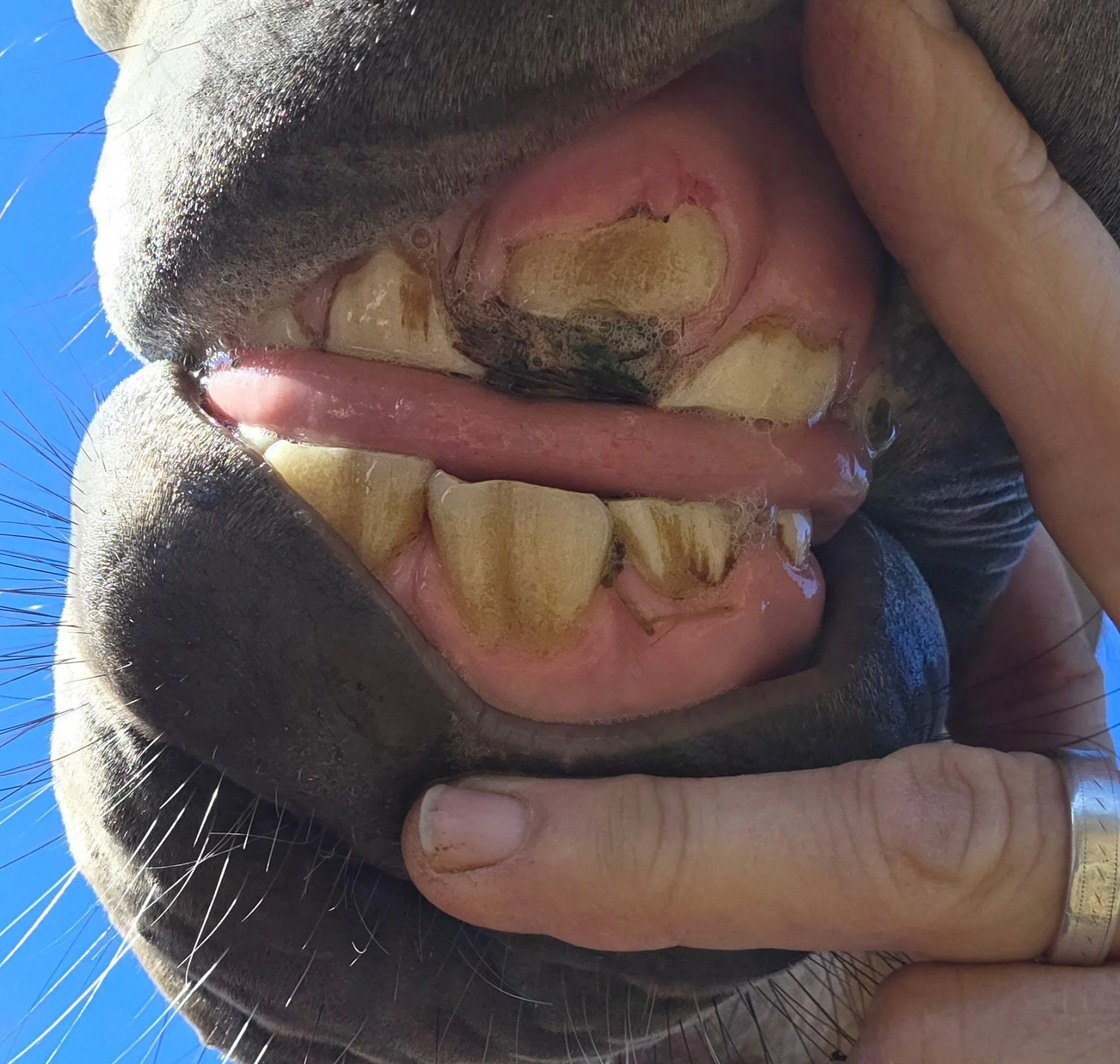
Keeping on top of things like crooked teeth, farrier appointments, etc is all part of being responsible farm owners.
The Garden
We had our first frost this week on the farm while we were off on our European excursion.
So we came back to the sweet potato vines dying. This week, we will toss and pull out the vines, throw them into the compost, and dig up the tubers.
Hopefully there will be a good crop - we experimented with growing them in large containers, which may have impeded the tuber production. We will see when we dig them up this week.
So, the basil and the tomato plants are now withered and dead - as always happens in sometime in the fall.
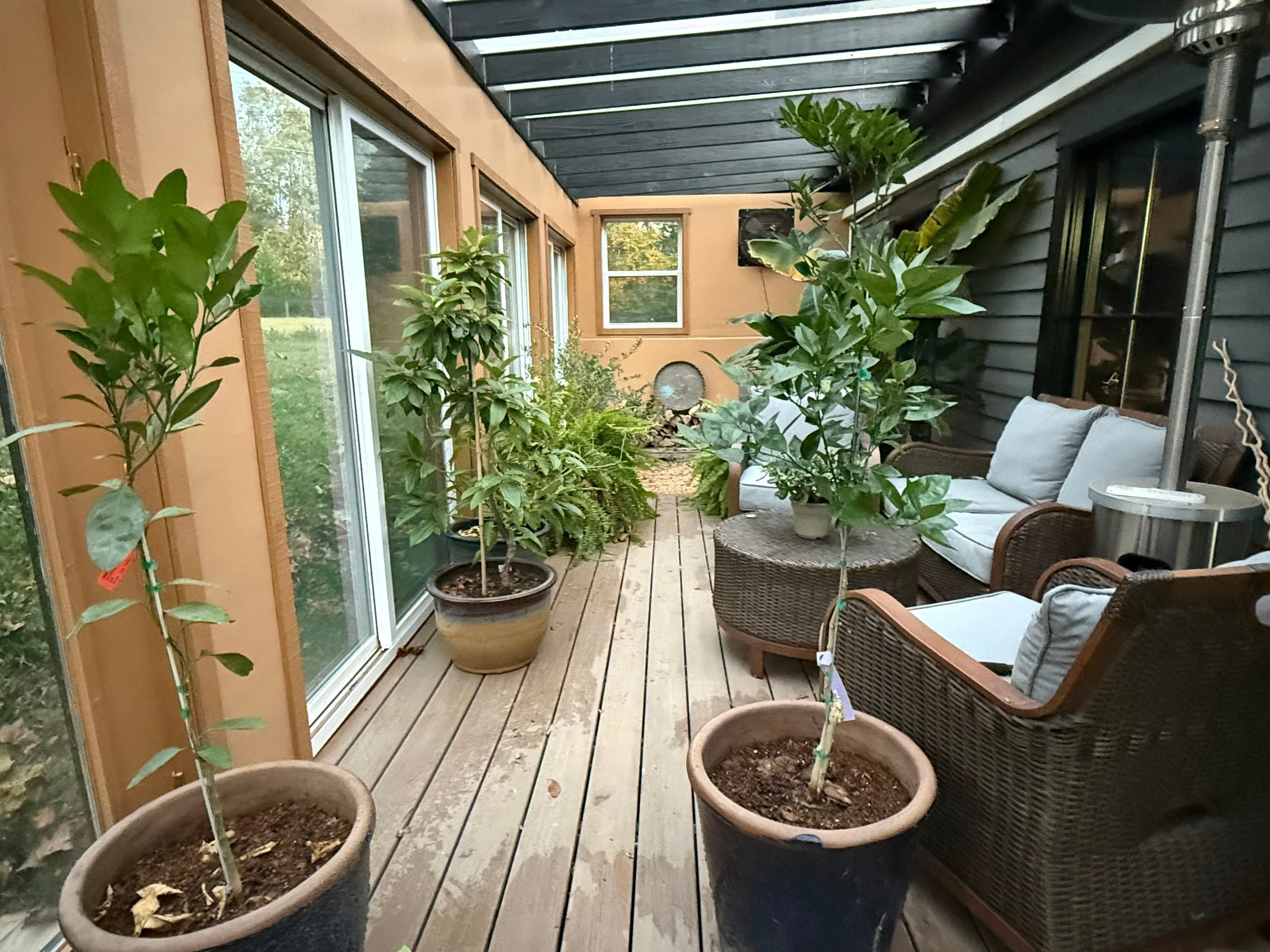
Before we left, we put all of our tender plants into the greenhouse. This included an avocado tree, our big Boston ferns, and various herbs. Not shown are the more mature lemon and banana trees behind me.
I can’t wait to hang out in the greenhouse this winter.
Last week, Jill picked a lot of the Anaheim and poblano peppers. As she ran out of time, she just threw them into freezer bags and popped them in the freezer.
Of course, Kitty and Gonza inspected all the bags (to make sure the contents weren’t edible).
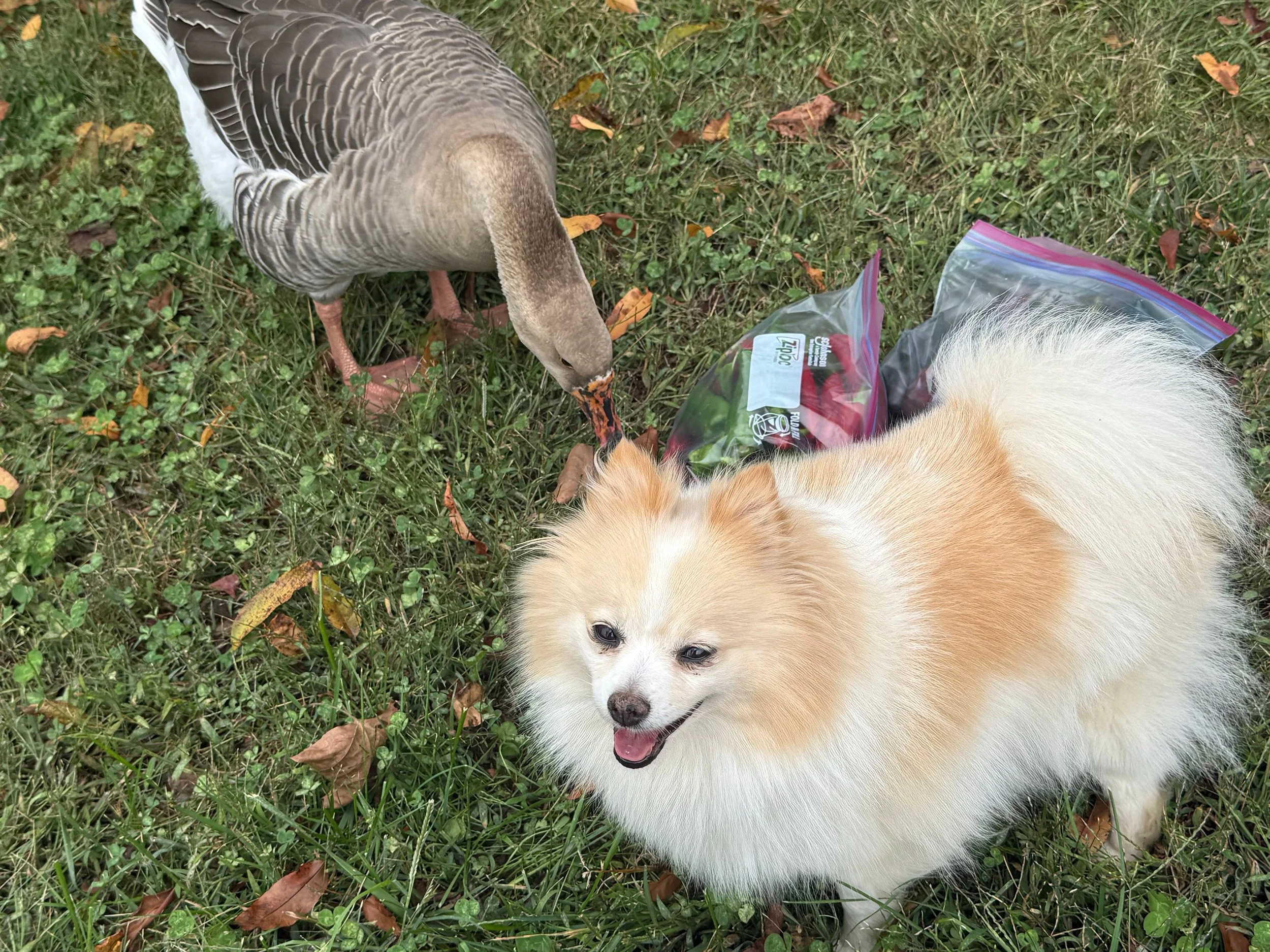
Of note, Gonza and Gizmo have decided that Kitty is acceptable.
Of course, we are absolutely smitten with the little thing. She sticks like glue to Jill and, when we are gone, attaches herself to our friend Alyse, who is living in one of our houses right now because her own house was partially burned down by a fire a few months ago.
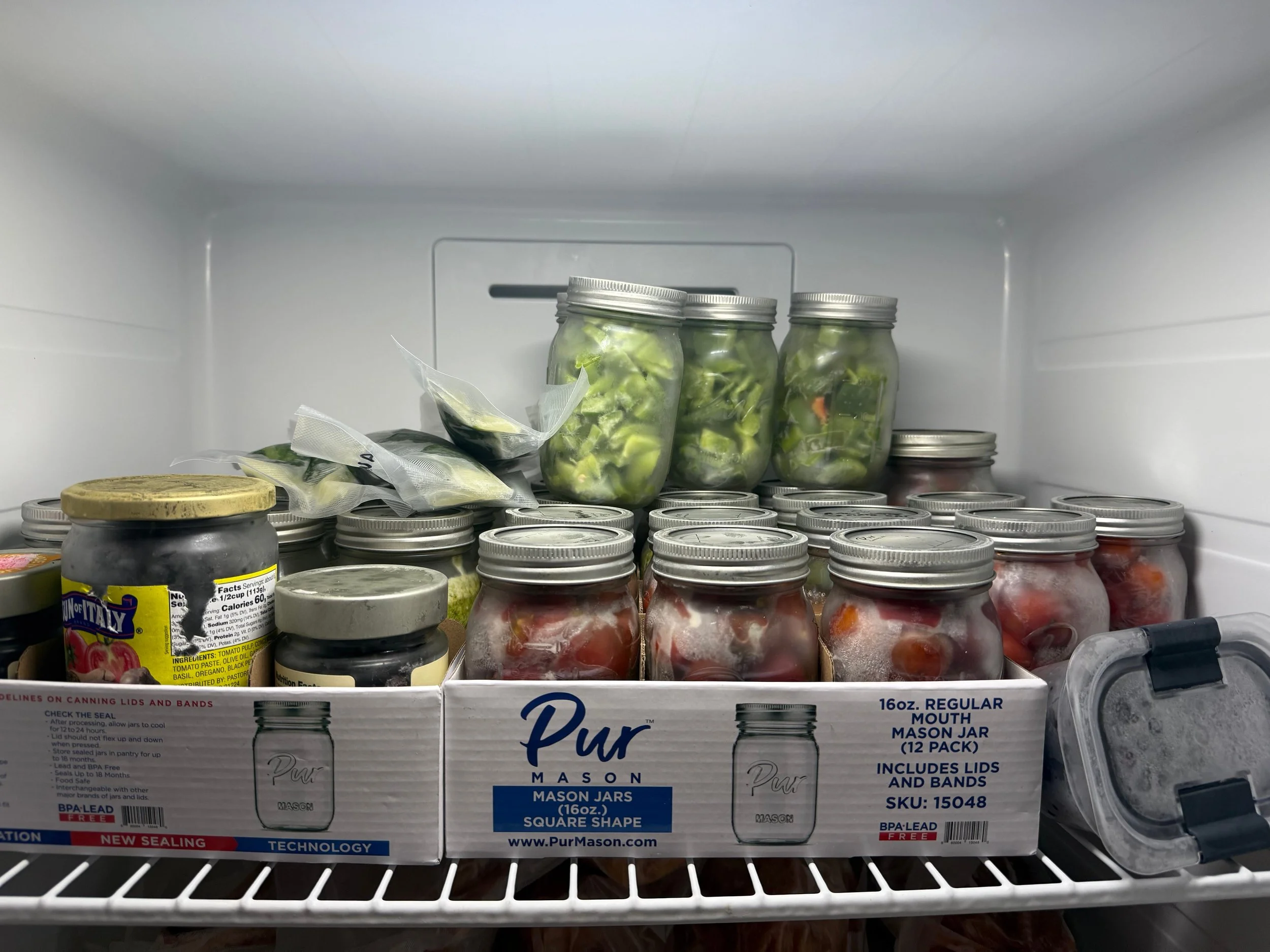
However, for our bell peppers that she harvested earlier, she chopped them up , put them on parchment paper, and froze them. Then she transferred the chopped pieces into mason jars. Shown here are some of the produce, sauces, and berries that she has frozen this year.
“The work of volunteer groups throughout our country represents the very heart and soul of America.
They have helped make this the most compassionate, generous, and humane society that ever existed on the face of this earth.”
— Ronald Reagan
Snap benefits
I feel a need to reach out to any subscribers who receive SNAP benefits. I genuinely believe that this issue will be the straw that breaks the camel’s back in terms of the shutdown, and the shutdown will end soon.
Most people who receive SNAP benefits hold jobs but don’t earn enough to feed their families consistently. What people like to refer to as the “working” poor. Whether or not some illegal immigrants or even immigrants who are temporarily collecting such benefits is an issue, but that is not my point here. There are people in our own communities who are suffering.
There but for the grace of God, go I
Jill and I have had periods in our lives when we were young adults, when we didn’t have enough money to buy groceries. So, I get it. It is tough to live paycheck to paycheck.
We were lucky enough to have a set of parents who were there to help us financially when we really needed it, which made all the difference. Many people don’t even have that kind of a safety net. The stress that people with families who rely on food stamps to eat must be enormous right now.
All I can say is that I truly believe that Congress won’t let this go on any longer. I don’t care what side of the aisle you are on, the working poor and indigent deserve better than this.
At one time, this country had a strong volunteer base to help those who needed help; the government has since replaced many of those efforts. Of course, we hope that as the government shrinks, our volunteer efforts must grow. We must grow a strong, giving populace and a strong economy - to help those who need help. Not because we must provide help when truly needed, but because we can and want to. Because we want to build our local communities up, as well as the people who live in them. We must rebuild our culture of giving… That is truly the American way.
But these efforts won’t develop overnight. It will take resources, organization, and time to build such a culture again. So we have a problem in the United States today; there are people who need our help now.
Now is the time.
Rather than waiting until Christmas, this is a great time to donate money, food, and clothing to your local food bank and charity. Because families near you are going crazy with worry and fear about feeding their families next week.
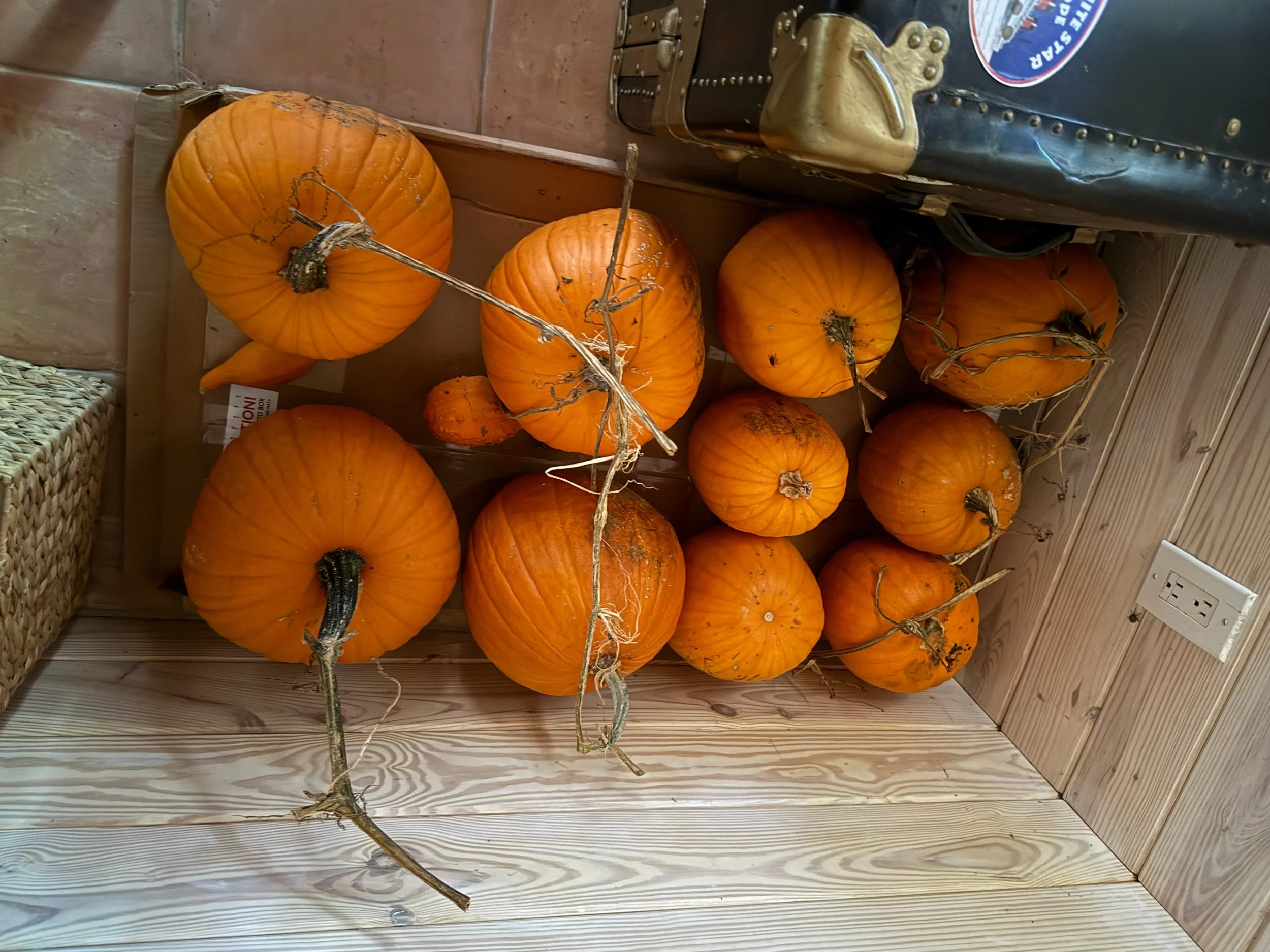
This afternoon, Jill and I are going to take our rather large crop of pumpkins to the local food bank in the hopes that some families who don’t have money to buy a pumpkin at Halloween might benefit, or even use them for a meal or two. We should be able to donate a fair number of pumpkins in all - which should make some little children very happy.
We both have several gently used coats and winter clothing that will be going to a local charity next week. In my opinion, clothing is best for giving to local charities, including churches that take such donations. Some of the national charities send much of the clothing donations overseas. Nothing wrong with that, but if you want to help your local community, make sure your donations do.
So, think hard about donating this week—because it could make a huge difference in someone’s life.
OK - enough with the lecturing.
And on with my day!